It is difficult to get a good impression of this place in a photo. Maybe
one from the sky would be better.
It is difficult to get a good impression of this place in a photo. Maybe
one from the sky would be better.

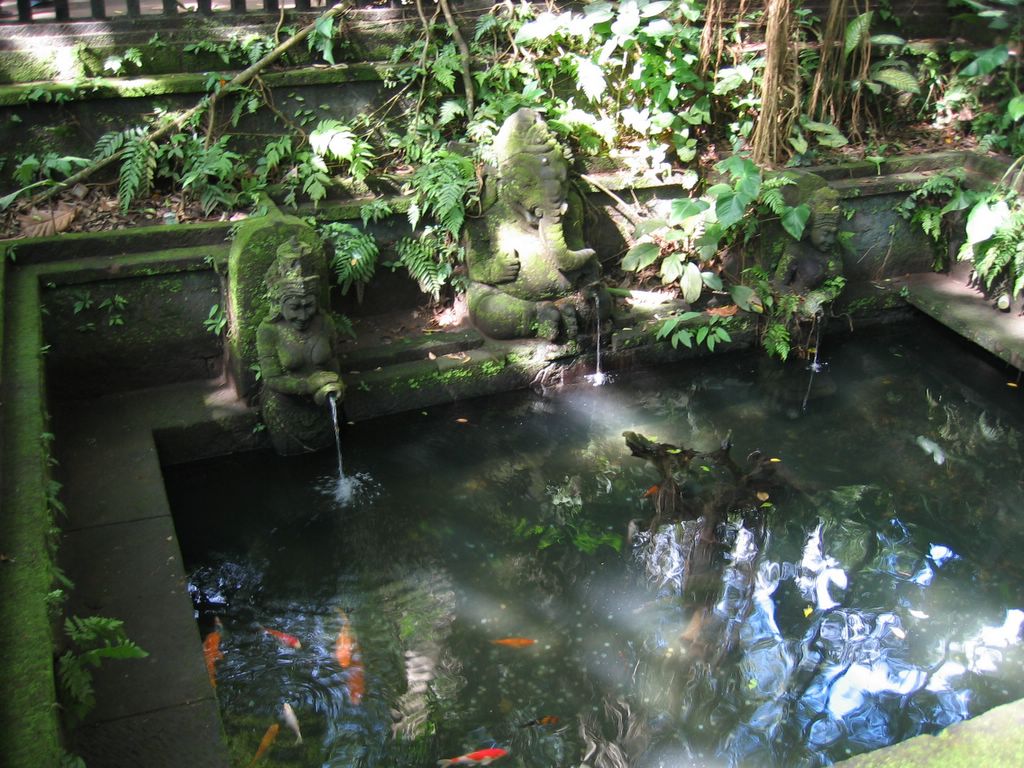
In Ubud, we visited Monkey Forest. There are tame macaques everywhere looking bored. They were hilarious to watch. They were pretty bold -- jumping on tourists to look for food in their bags.

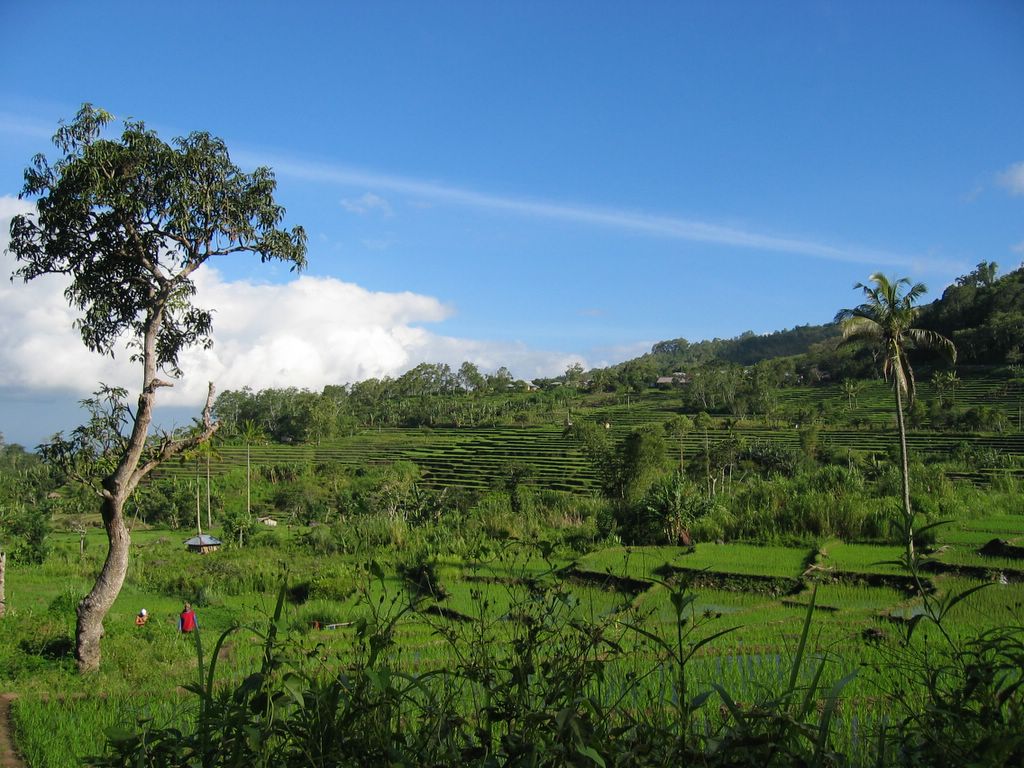
You see pretty rice patty fields all over the place. This is one of the prettiest fields I saw; it is just north of Ubud. Rice takes three months to grow, starting in deep water, and after three months it dries out.

On a day trip from Kuta, we saw this view of Gunung Batur and Danou Batur. There are active volcanoes all over Indonesia. This one blew and poured lava over a town below it in 1963. You can see the lava track to the right below the volcano.
I made it back to Kuta Beach on Monday, but instead of leaving after one night, I ended up staying for four. That pretty much sums up a lot of the trip planning I've been doing; plans go out the window, and I've been going with the flow. I caught up with a couple of Brits that I had met on my first day in Bali three weeks ago (they were on the same flight from Auckland), and I also met a cool Canadian couple, and we all hung out in the evenings. Good company.
We took a day tour around Bali, which satisfied me enough to know that hanging around poolside in Kuta was not so bad. We saw Mt. Batur, one of many volcanos on the island. And we spent a couple hours at Monkey Forest in Ubud, the other big tourist town in Bali. Ubud is known for its artsy-fartsy boutiques, while Kuta is known for its surf, beach, and nightlife. The macaques (monkeys) at Monkey Forest were very entertaining, jumping on each other in their little pond; very human behavior. But, returning to the pool at the hotel in Kuta Beach was the best. After the trip through Nusa Tenggara, I really can appreciate Kuta, much more than when I first arrived a couple weeks ago.
I was going to go to Mt. Bromo on Java a few days ago, but I really didn't feel up for a 12-hour overnight bus trip. Today I flew to Yogyakarta for a little more than the price for a 16-hour bus ticket. I should be here for a couple days, but then again, you never know.
Today I went to Borobudur, a 9th century Buddhist step pyramid. It is massive and amazing. I've never seen anything like it. In Taiwan, the Buddhist temples are rather garish in colors, but the dark gray stone of Borobudur seemed just right. I was careful to walk around each of the levels clockwise before ascending a level through the East gate. To walk counter-clockwise is to speak with the spirits of the dead. But other the tourists didn't seem to care; they're mostly Muslim in Java.
I took the public bus system to get to Borobudur, which meant taking changing buses, and then taking a tricycle-rickshaw type of thing to the temple. On the way back, the guys on the bus tried to overcharge me, but I didn't even budge. I paid the same price I paid for getting up there. I was feeling pretty ornery from the heat and the early morning flight. Then, as I was getting into town, I think a couple of guys tried to steal from me. One guy kept distracting me by saying this was my stop, constantly tapping me urgently for about a minute, meanwhile his co-conspirator got up to squeeze by me in the aisle. I realized then, that my backpack had mysteriously opened up. I quickly zipped it closed after an inventory and got away from them. I was warned by the taxi driver to be careful in Jogja.
Tomorrow I will try to get to the Hindu temple Prambanan at dawn. Or not. I had to wake up at 0400 this morning to catch my 0600 flight.
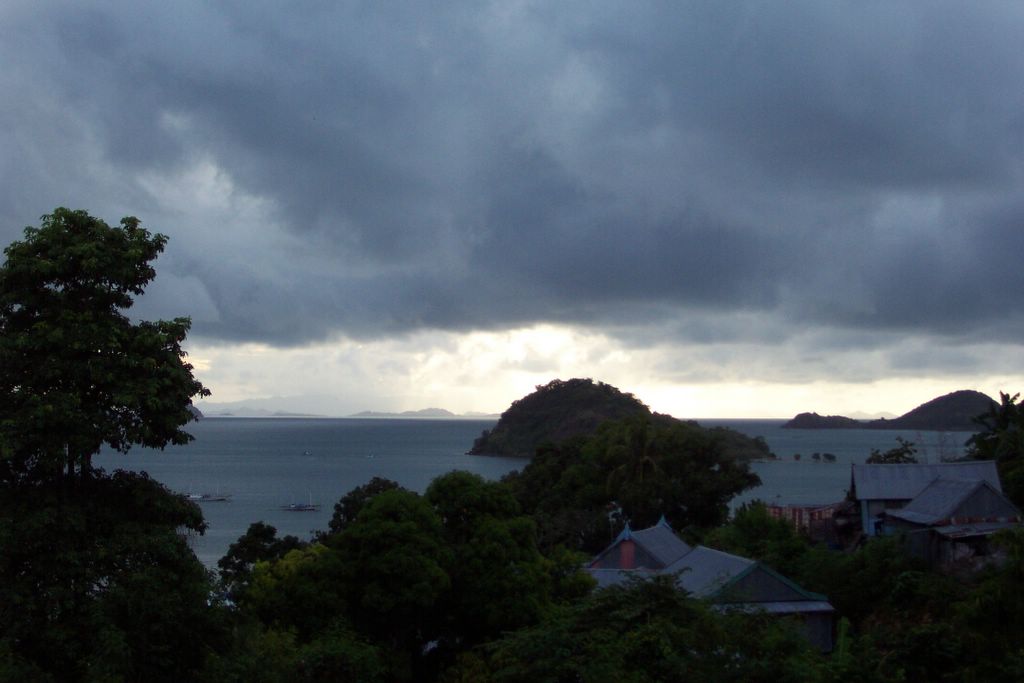
Nusa Tenggara is the name of the set of islands east of Bali. I set off last week from Mataram, on the west side of Lombok, headed for Kelimutu on the island of Flores. The first 17 hours took me across Lombok by bus, a ferry to Sumbawa, and a 12-hour overnight journey across Sumbawa to Sape, the port on the east coast. I was supposed to catch a ferry to Flores from Sape, but the ferry didn't show up, so I ended up stuck for a day in a small town. Actually, I would call it a village with a ferry terminal. The ferry ride to Flores was about 10 hours long, and I arrived in Labuanbajo, the western port on Flores, on a rainy night. I was pretty exhausted and had a runny nose from the overnight bus trip. I rested up in Labuanbajo for a day, missing out on an opportunity to go see the Komodo dragons on the islands of Rinca and Komodo, just a couple hours by boat from Labuanbajo.
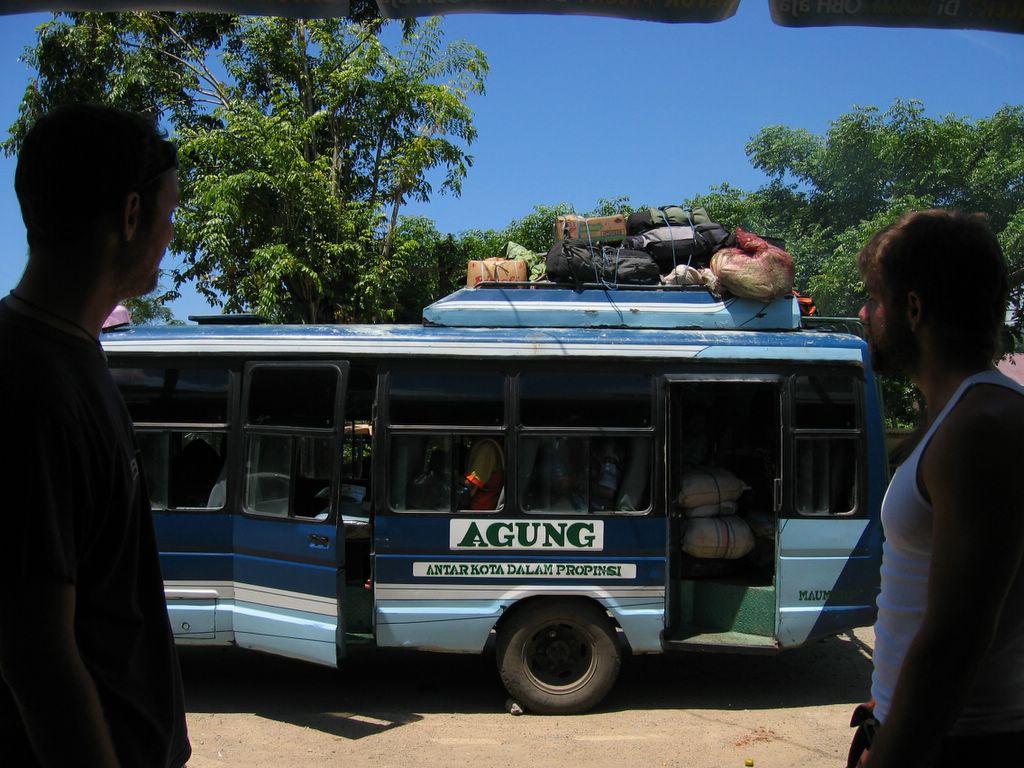
After a day's rest, I took a hellish ten- hour bus ride to Bajawa. It was a windy trip through mountainous terrain with spectacular scenery, that I couldn't be bothered to enjoy as I struggle to keep from vomiting. Bajawa was a small village in the mountains (it was actually kind of cool at night, a big change from the wet heat on the coast) surrounded by other smaller traditional villages. I didn't get to see any of these villages, because I got on a bus for a seven-hour trip to Moni, the village next to Kelimutu.
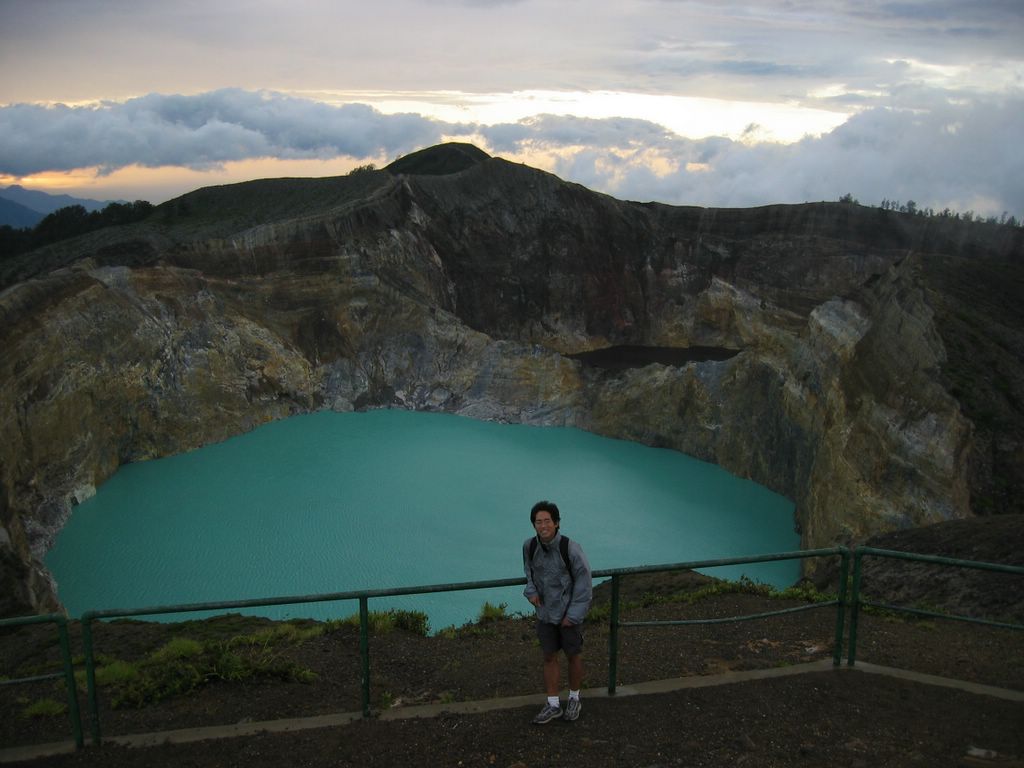
Kelimutu (1600 m) is a volcano with three lakes in its crater. The lakes are all different colors due to soil composition. They are currently brown-black, turquoise, and dark green. Apparently they change colors over time and with the weather. They are pretty spectacular to see at sunrise. The weather started off windy and rainy, but an hour after sunrise, the clouds and mist blew away I had good visibility to see all three lakes. Kelimutu is the main attraction on Flores, but the journey there, was the best part.
Shacks and farm animals
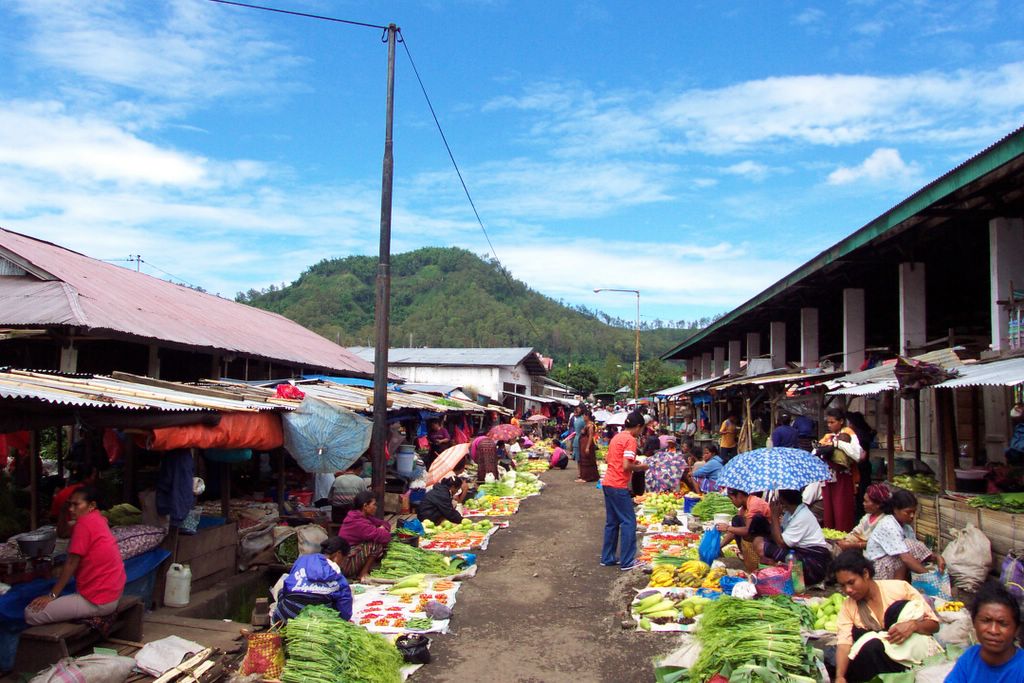
It was rainy weather off and on all week, starting with my bus trip across Lombok. The bus terminal in Mataram was full of hawkers selling their wares (books, clothing, and snacks). I saw these guys balance huge sacks (as large as an adult) on their shoulder and climb up ricketty ladders to the roof of the buses. Like I said, Indonesians are hardworkers (like the Hasty-variety).
The bus passed ramshackled villages on its way through Lombok. Outside of the city, folks live in thatched or tin-roofed shacks, with walls made from panels of woven fiber and flax. They have dirt floors and no running water or electricity. People light oil lamps in the evening and cook over fires. There is no indoor plumbing, and their running water is a stream, which is sometimes pretty murky, but that's where they bathe and wash. They have goats, pigs, and chickens running around. There is an occasional cow that is tied up to a tree, which I am told, like the goats and pigs, is meant to be sold for celebrations or festivals. A cow is worth about 900 MRp or $1000. I've seen some wild stuff they do to the animals. At a midday market, I've seen them throw a pig on to a truck, by its ears and a rope around its hooves. It'll be a while before I forget the sound of a squealing pig. We were on a bus, and someone said there was a goat under our luggage on the roof. I didn't believe until four hours later, as we watched the bus pull away, a huge goat wobbled to its feet, standing on a moving bus. You will see enormous sows roam the streets looking for food during a midday siesta on Flores.. I watched chickens peck each other while tied together at a morning market. This place is totally wild. You know, it's uncomfortable to watch, but when you eat meat, you've got to face reality.
Indonesian "corruption"
On the ferry from Lombok to Sumbawa, I spoke with a Sumbawan living in Lombok. We talked about the economy of Indonesia. I have heard from Indonesians, that the thing holding them back from getting out of poverty is government corruption. The Jakarta Post has a few articles on corruption everyday. I couldn't get a sense of how this was different from any other country in the world. I'm of the opinion that the entire country operates with kickbacks and under-handed deals. Maybe it's because Indonesia is so poor and has so little in reserve that the waste and inefficiencies of corruption are felt much more. Many Indonesians point at government corruption as their biggest problem, but none of them bat an eye at charging foreigners more for goods and services. This is an accepted fact for tourists coming to Indonesia (and, I expect, most countries in the region); you have to bargain for almost everything from bemo rides to accommodations and sometimes even food. It is sort of fun going around bargaining for things, but I've come to accept that as a tourist, I will be paying more than Indonesians (I just don't want to be paying too much more). I learned from a Chinese-Indonesian dude (born in Indonesia of Chinese ancestry) that he never got to pay the local's price, even though he was from Indonesia. I believe in capitalism, but without fair prices and business practices, how can a country expect their government leaders to behave any differently?
Travelling through Indonesia for a Taiwanese-American
So anyways, if Indonesians can tell that a Chinese-Indonesian person is not of Indonesian heritage, then they certainly can tell that I'm not Indonesian. In fact, the only people that confuse me for being Japanese are tourists. And I don't just mean Westerners, because even Japanese tourists confuse me for being Japanese. I remember hiking at Mt. Cook, and passing a bunch of older Japanese tourists, each one greeting me with a "konichi-wa!" which I happily returned. A problem with this is that the Indonesians don't expect the Japanese to bargain with them. I think many Westerners, can't tell the difference between myself and an Indonesian local, but I haven't been at any resorts where I could be mistaken for the hired help (this happened to me once in Thailand).
Toilet training in Sape
I arrived at Sumbawa at night. The remarkable thing about my trip across Sumbawa at night was the darkness. Except for a few villages we passed through, the island was dark, and I could only see the looming silhouettes of mountains nearby. When the bus stopped, hawkers would come through, selling snacks. When I got to the big city of Bima at 0330, they ushered me off the bus (but wait, I'm supposed to go to Labuanbajo!) and put me on a shuttle to Sape, the eastern port on the island. Two hours later, with drifting sleep, breathing secondhand Indonesian clove cigarettes ("kreteks"), I arrived at Sape. Jam berapa bakal? (what time is the boat?) jam tujuh (7 o'clock) Tiga puluh minutes? (30 minutes?) Tidak, duapulus jam (no, 12 hours) Doh! (Doh!)
I met some Finnish folks also stranded who spoke Indonesian and found out that the ferry didn't show up for one reason or another. We were stuck in Sape. We all checked into a guesthouse next to the ferry terminal, so we could rest from the sleepless bus ride.
At the hotel, I had my first encounter (at least on this trip) with the Asian squat toilet. I have seen them before, in Japan and Thailand, but I have never used one for, um, number two (if you don't count the outhouse in Mongolia). I knew I would be faced with the squatter eventually, and that day had arrived. The squat toilet is sort of a toilet bowl sunk into the floor, with two grooved foot steps on either side. You basically squat to use the facilities. The complicating factor on top of this is that there is no toilet paper, but there is a spigot of water with a bucket and a scoop. This is why some cultures don't shake or eat food with their left hands. Awwwwwwesome. After a week of travelling, I can say I am comfortable with the squatter. I feel like someone who just got potty-trained.
Cultural Realities
There was nothing to do in Sape. I had dinner in a warung and spoke with a Taiwanese dude who had been living and working there for the past year. He told me that Indonesia was basically like Taiwan thirty years ago.I also spoke with some Indonesians who had been stranded in Sape too. Where I paid 120 kRp to get from Mataram to Labuanbajo, they paid 60 kRp. Tourist prices. At least I didn't pay 200 kRp.
There was also a tranvestite at the hotel. It was wierd, to say the least. There was a wierd looking woman watching tv in the lounge, and she had too much makeup on, so I thought she was just an old prostitute, but then some Indonesians told me she was a he. Yikes. Even though, I was freaking out of my skin, sitting five feet from he/she/it, the Indonesia guys sat down next to the he-she thing, like it was no big deal. Ha! And we think we're so open-minded in the States. We are lead to believe a lot of nasty things about Muslim cultures. They are oppressive toward women because they wear burqas (is that any different from the latest Cosmo or teen mag making American women and girls feel fat and inadequate?). Would it surprise Americans that Indonesia had a female president from 2001-2004? (I was surprised.) I don't see a woman in the White House any time soon.
The Finnish
The Fins I met were pretty interesting. They were still working in Finland, but they spent their holidays in Bali. The couple actually spent up to five months each year in Bali, where they rented a five-room apartment for about $50/month. Apparently in Finland, to battle unemployment, the government will pay a worker 30% of his or her salary to take a leave of absence so someone else can work his or her job temporarily. I'm not sure how smart that system is, but it's great if you want to spend your time away in Indonesia where you can still live like a king. These Fins actually learned to speak and read Indonesian. They were not your typically travellers. They were grandparents, and they had not travelled much elsewhere, but they liked Indonesia and adapted well.
So, anyways, the next morning, we all got on the ferry for a ten-hour trip through rain and rough seas. That was fun. I didn't eat or drink very much because I didn't want to visit the toilets. One of the dudes, got splash-back on his arm. And no running water or sinks to wash it off. Nice.
I met up with a Canadian dude on the ferry. He ended being one of folks I travelled with through Flores, but not for another couple days.When we got to Flores, it was dark and rainy. I spent the next day resting and getting over a runny nose. If I had felt better, I might have gone to Komodo or Rinca islands to see the Komodo dragons, but it was not to be. Next time.
Other travellers
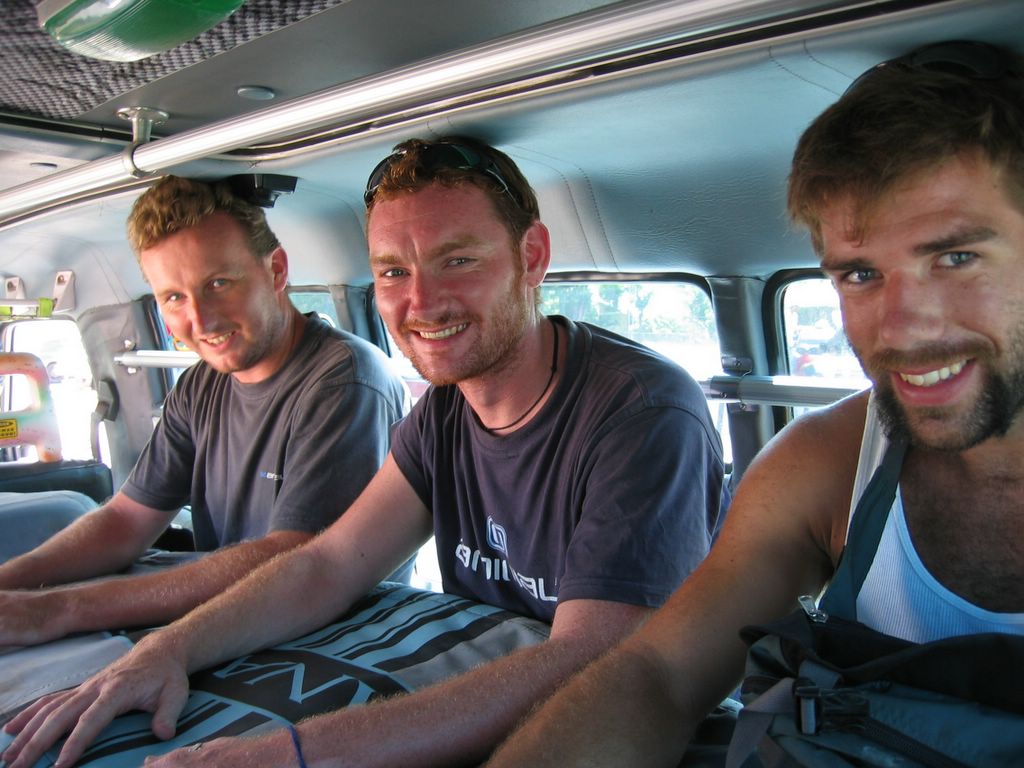
From Labuanbajo, I parted ways with the Fins and took the hellish journey to Bajawa. In Bajawa, I met up with the Canadian and a couple of British dudes. They were all solo travelling across Flores, and we sort of teamed up to continue onward to Kelimutu. In Bajawa, we had a dinner conversation, I could only imagine on the backpacker circuit. They were all finishing with their Southeast Asian travels and headed to New Zealand and Australia in the next week, and I was just starting that portion of my trip. They talked about places they had each been to in Thailand, Laos, Cambodia, and Vietnam. They spoke of these places with the familiarity you would use for your home town. ("Where did you stay?" "Oh, that place with the blue elephant? That was a cool place." "I was in Hanoi for ten days." etc.) It was awesome to listen to.
The Canadian had been travelling and working in Asia for the past 14 months since graduating from university. He had worked in Seoul, Korea teaching English (an apparently lucrative gig with no experience or formal training necessary) to save up some money, and was going to find work in Australia in a few weeks. One of the Brits had spent the last eight years working in the computer industry (five years with IBM) before quitting and hitting the road two months ago. He too was headed to Australia for a year (actually to Cronulla, where I stayed south of Sydney). The other Brit had been travelling off and on since he was 18. He had been to South America twice, Africa twice, Australia, the States, and Southeast Asia twice. He had just finished saving up money for the past four years, before setting off on his current trip. And this is normal amongst the travellers I've met on Flores. They are folks who have "taken the red pill", so to speak, "to see just how far the rabbit hole goes." It is amazing.
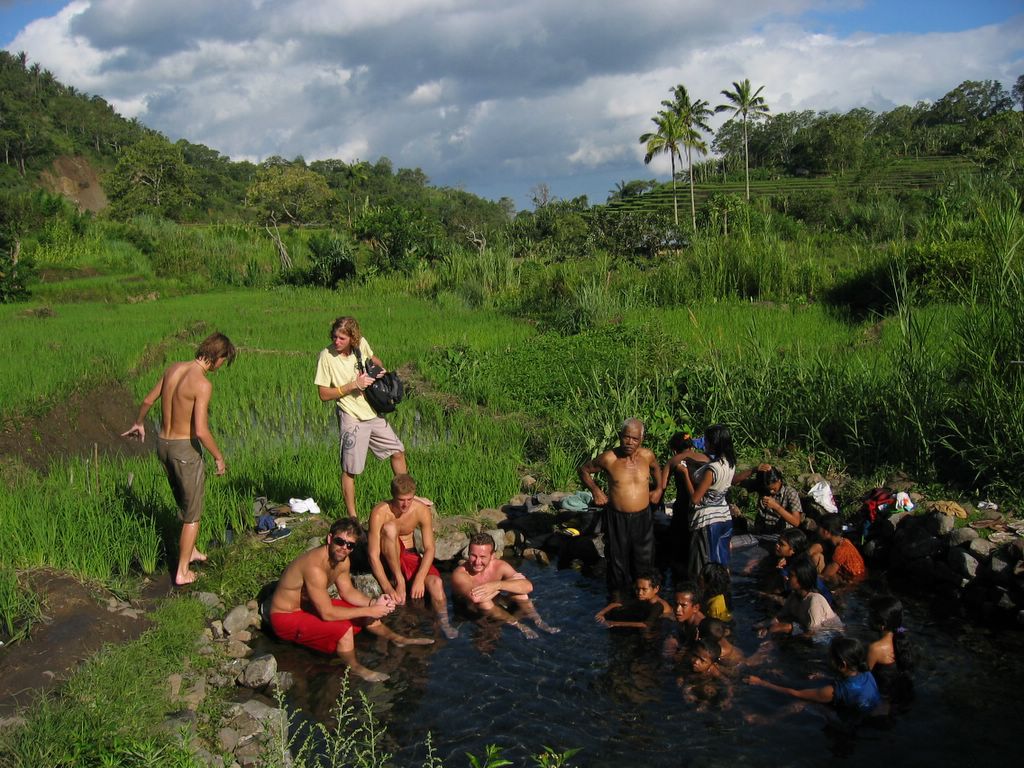
So anyways, the four us headed off on a seven-hour bus trip to Moni, the village at Kelimutu, where we stayed for a couple of nights. We chilled in the quiet mountain village, happily dumping money into the local economy (it's the slow season around here). We met up with a couple of Dutch guys and a Quebecois at Kelimutu, and we all hungout at a hot spring in the middle of a terraced hill of rice patty fields. It was awesome. The weather was hot, and we were trading travelling stories when a bunch of locals wandered down to share the spring with us. They washed their clothes, and themselves, and the two groups sort of just looked at each other. It was pretty amazing.
Maumere is a traveller's Bermuda Triangle
From Moni, we headed to Maumere, the biggest city on Flores, to find a flight back to Bali. The airline booking system is horribly inefficient. No one knows what the actual schedules are, because you will get a different answer from everyone from the ticket office to travel agent to the airport. I bought a ticket to leave in a couple days, but the guys went to the airport and were able to bribe their way on to a flight for the next day (I think some people found themselves cancelled). Good on them, for doing so, but it started a whole black market ticket sale, where all previously sold tickets were disregarded, and you had to bribe your way on to the flight. Angry customers had to bring the airport police in to intervene. So it goes in Indonesia. (And they complain of corruption. It all starts with the individual.)
Hello, Mister!
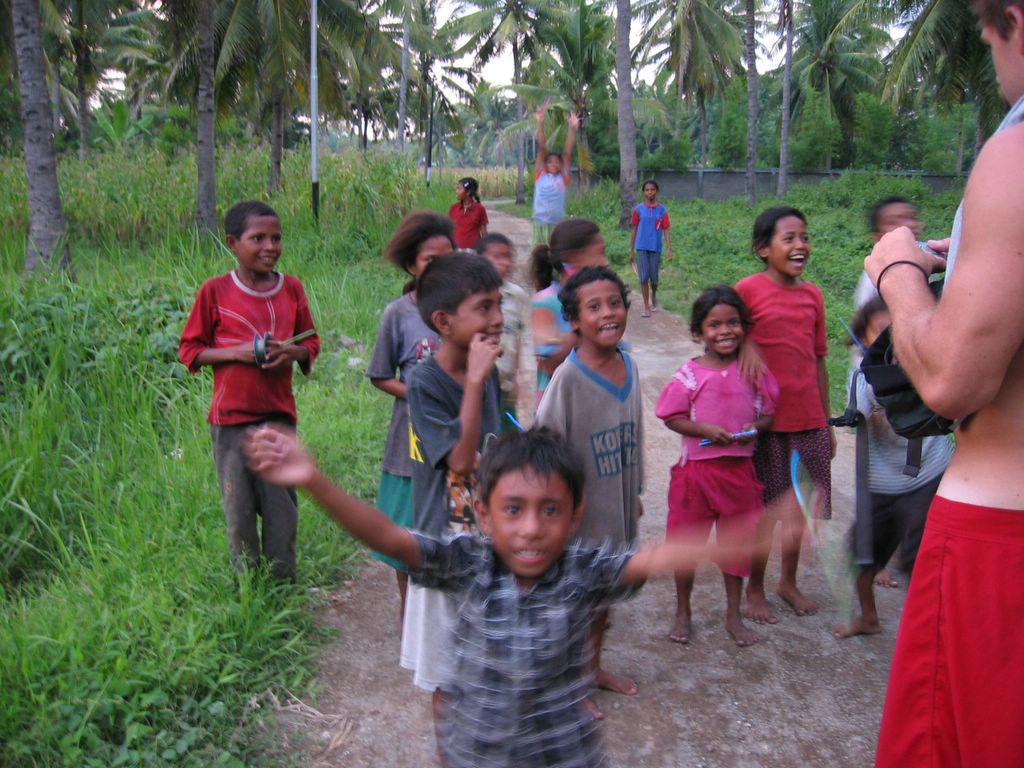
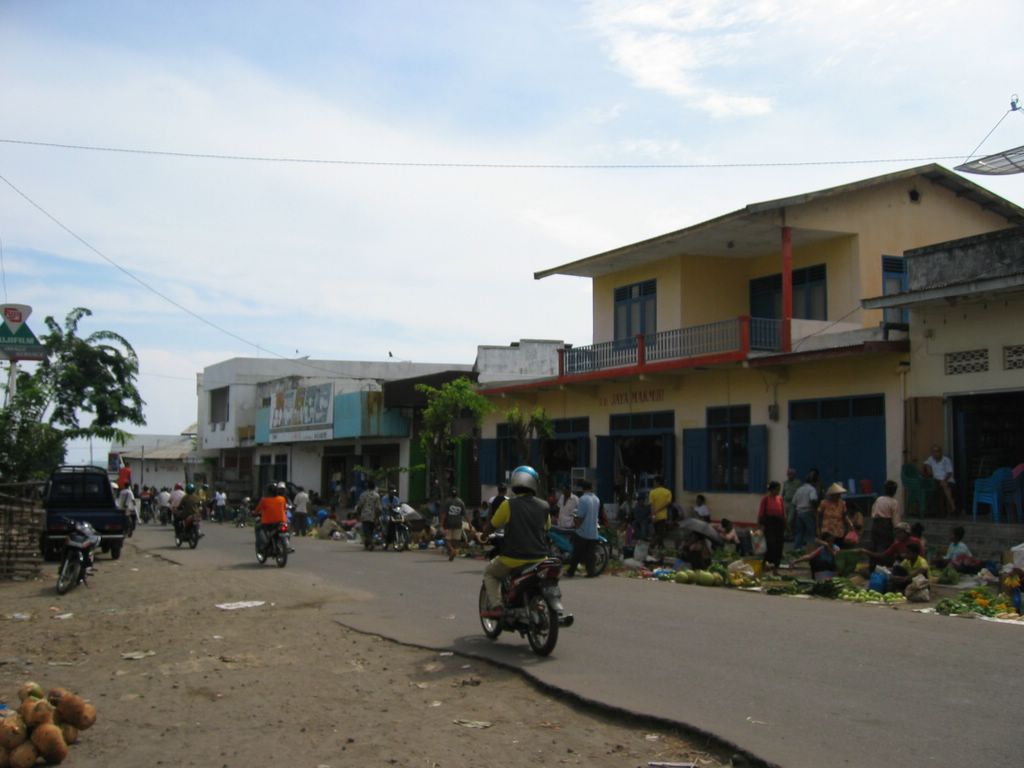
Anyways, we spent one of the days in Maumere wandering around looking for the beach. The town is on the north side of Flores, but as with many port towns, the water is pretty nasty. We wandered around through villages with throngs of kids screaming and laughing, "Hello, Mister!" I have found Indonesians to be some of the friendliest people I have ever met. They are full of smiles and ever non-threatening. There have been no anti-American threats or demonstrations or graffitti. Are you sure this is a Muslim country? Even when I was travelling with three six-foot-plus white dudes, I never witnessed anything but cheerful greetings. Sure, sometimes your "new friend" at the hotel or bar might be angling to make some money on the side, but that's to be expected. These people are poor and they look at tourists as money-bags. But certainly the rebel activity in the northern state of Aceh in Sumatra is real, as is the paltry two-year sentence the purported leader behind the 2002 Kuta bombing received, but to use this as a representative of a nation and a culture is to equate the Ku Klux Klan with Americans and Christianity. Crime and extremism exists in a lot of places, and they make good newscopy, but it's easy to make the mistake of treating the news as something it isn't. If it were "new", it wouldnt be in the "news". Just like people don't write about the nice folks in Biloxi, Mississippi, people don't write about the friendly Muslims in the, well, world. To not travel the world, in fear of anti-American terrorism, is like like not swimming for fear of shark attacks.
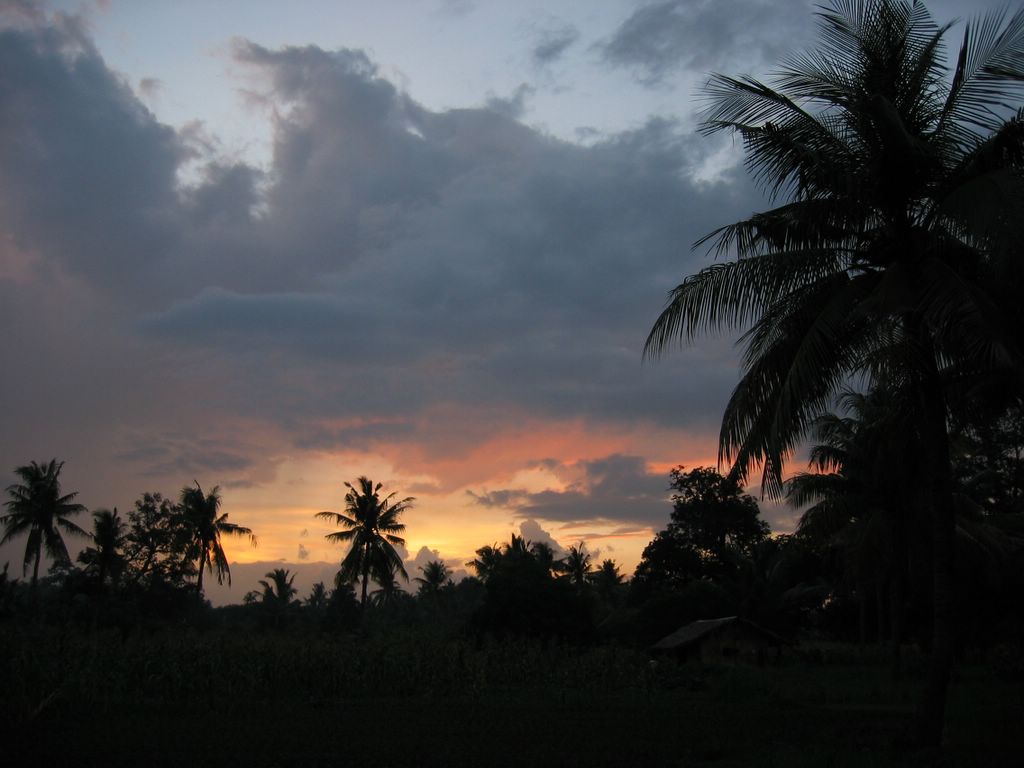
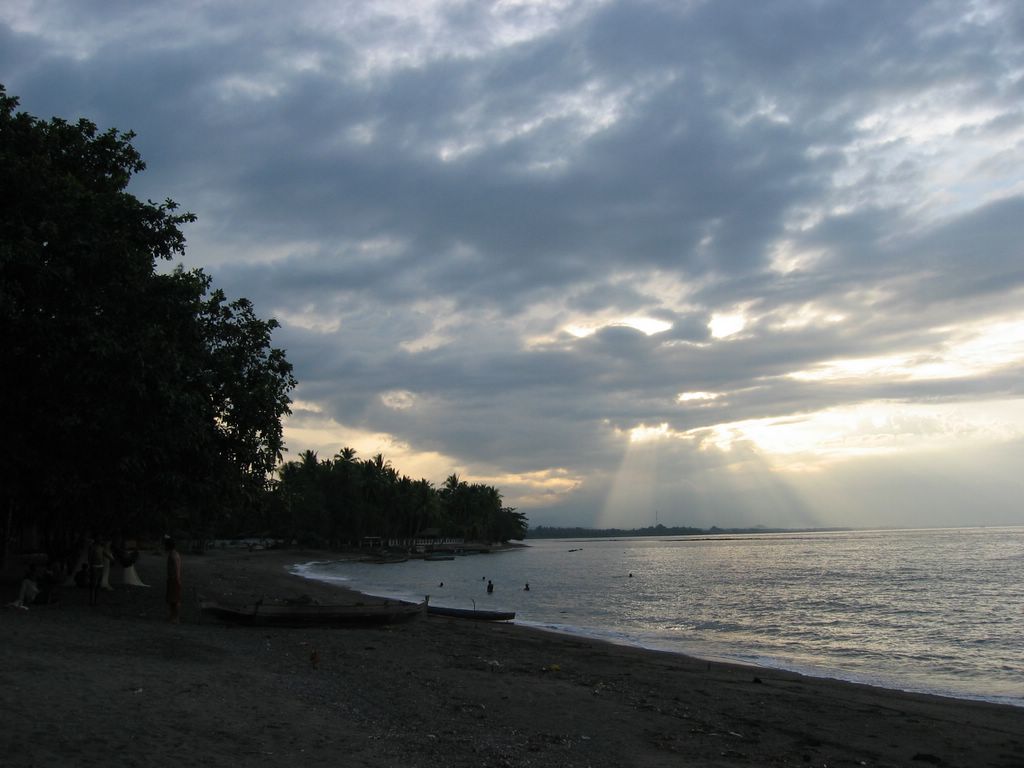
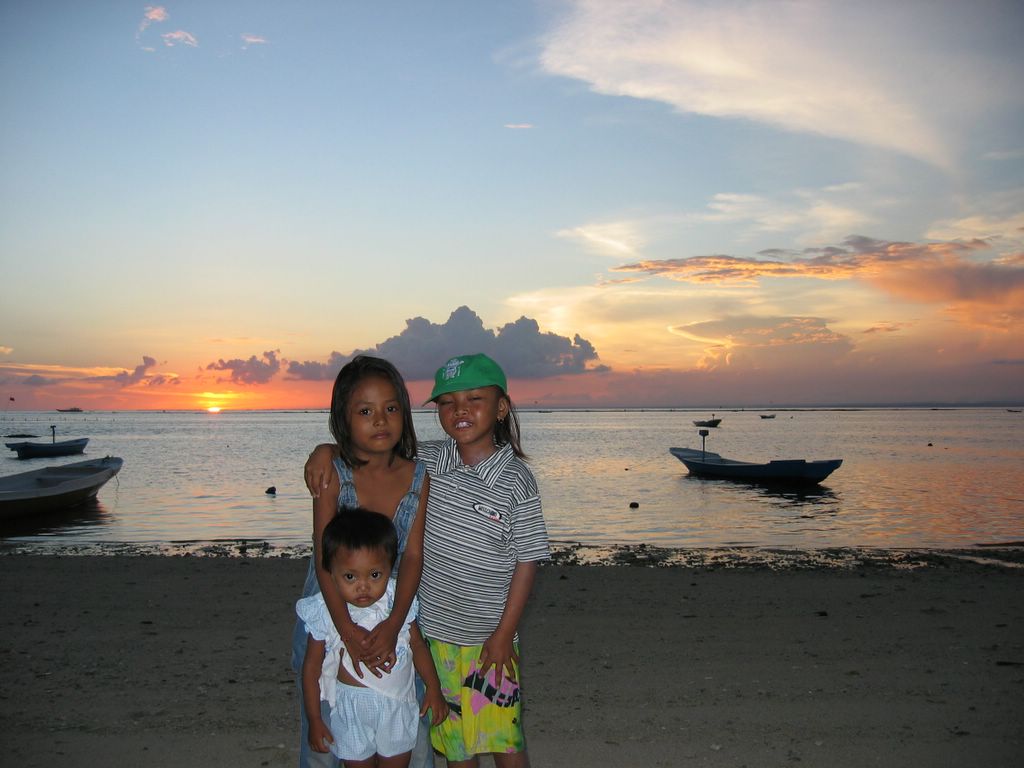
Speaking of swimming, we eventually got to a nice beach with clean water and soaked in the perfect temperature. The sun was setting behind the mountains. It was perfect. As we headed back to the main road, the sky turned an red-orange, and there was music coming from the shacks on either side of us (of the bongos and guitars-variety). Some kids had followed us, and we started dancing, which cracked the kids up. Pretty soon there were about twenty kids all laughing and giggling. The sky was orange. The music continued playing. Flores is a magical place.
Kuta is a big tourist town for Australians and Europeans. There were loads of tourist shops, bars, and losmans (guesthouses). Everywhere touts were trying to get my attention for "transport?" or renting a motorcycle or marijuana. It was fun and exciting to be there, but also exhausting from being assaulted every few feet. Lots of people come to Bali to get drunk and party in Kuta, but I was getting tired of that place and had to leave.
From Kuta, I was able to catch a ride on a couple bemos to Sanur. "Bemos" are minivans that drive around looking for people to pick up. It's the public transportation system to get around short distances (and even long ones). Basically they have benches built into the back of the minivans and drive around with their door open, always slowing down and honking, to pickup more passengers. I learned a few Balinese phrases and the numbers in Indonesian, so I was able to bargain and get the local price for part of the trip to Sanur; most bemo drivers can't speak English so it helps to learn some Indonesian. Speaking the local language, specifically Balinese, always put a smile on the faces of the locals. There are about 300 different languages in Indonesia (different languages, not just dialects), but the official language is Indonesian. I learned simple phrases which sometimes impressed the locals into giving me a fairer price or maybe confused them into thinking I was living here.
Sanur is on the east coast of the small peninsula that is on the southern part of Bali. I was there to catch a boat to Nusa Lembongan. There were fewer tourists in Sanur, but it was more "up-scale" with big resorts there. I was able to get some food at the local night market; no tourists there! I had some "es campur" which is shaved ice with mixed toppings of syrup and candied and jellied stuff (I really don't know what was in it). There were bees and flies buzzing around, and the hygiene wasn't what we would consider acceptable in the States, but then again, if you've worked in the food industry back home, you know there's a reason why you can't see the kitchen in most restaurants. Anyways, it was refreshing to have something cold in the sweltering heat of the tropics. I had some nasi goreng (a big plateful of fried rice) cooked right in front of me on a huge wok. It was fantastic. I was dripping even more sweat from the raw chili peppers I was eating with the rice. The total cost: 75 cents. It sure beats the prices at the tourist places (5-8 times the local price), which is still cheap, but a rip off considering what they should be paying.
The next morning I took a public ferry to Nusa Lembongan, one of three islands just off the southeastern coast of Bali The boat was long and had two outriggers for support (thank goodness!) and three outboard engines. We putted along for about two hours to get to the islands which were about 14 miles away. I paid the set tourist price of 33k Rupiah (the locals pay 10k).
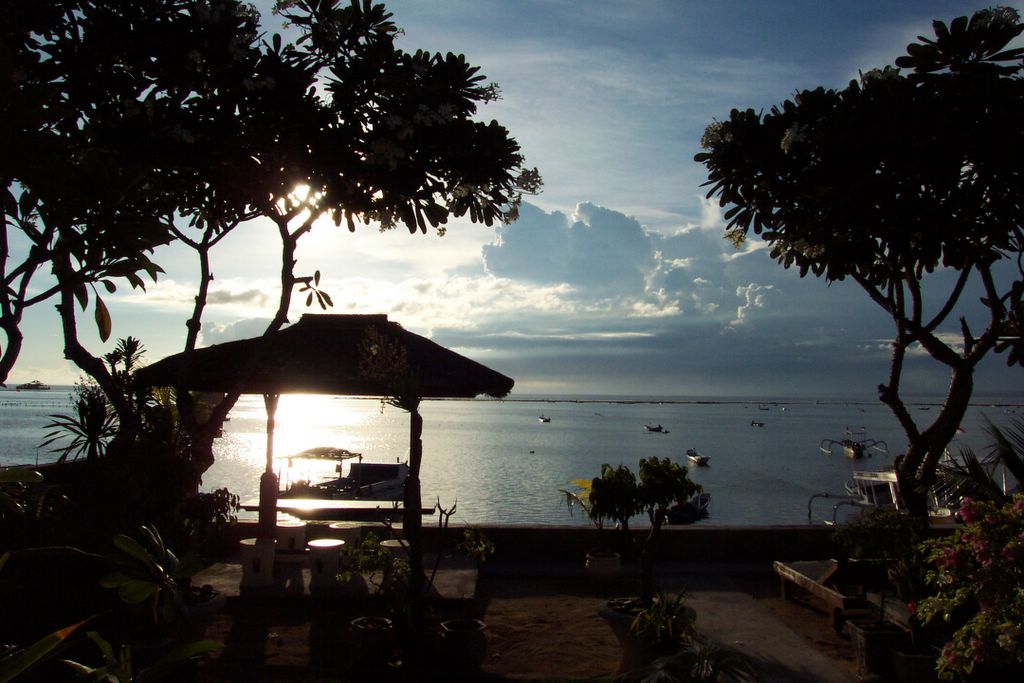
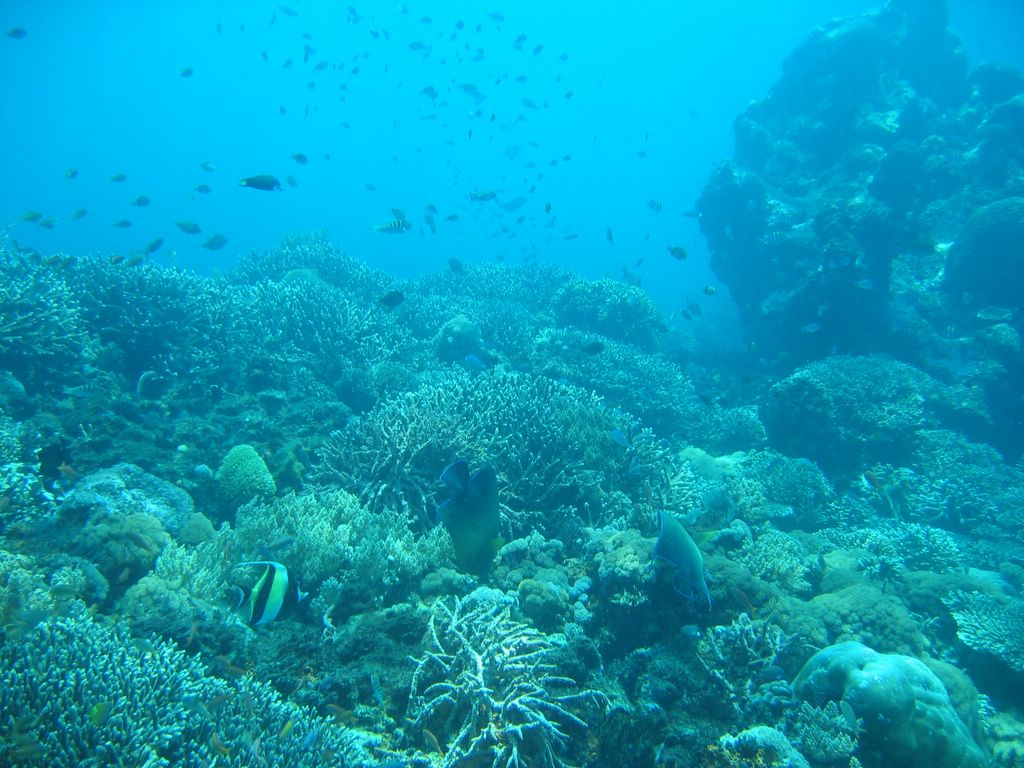
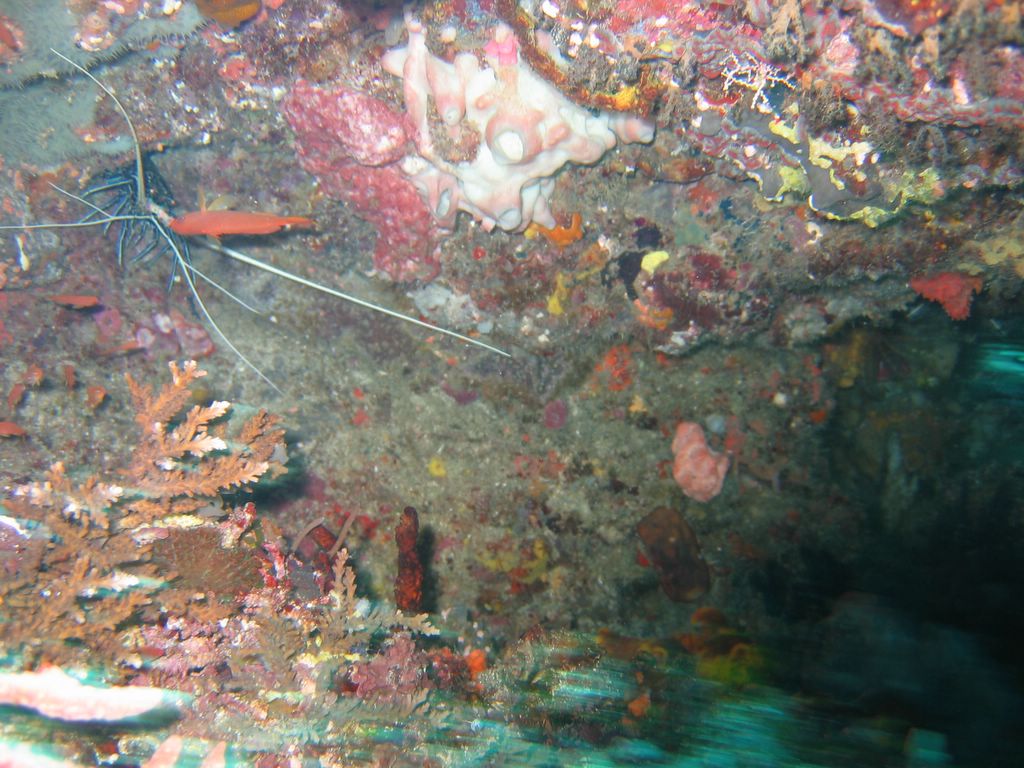
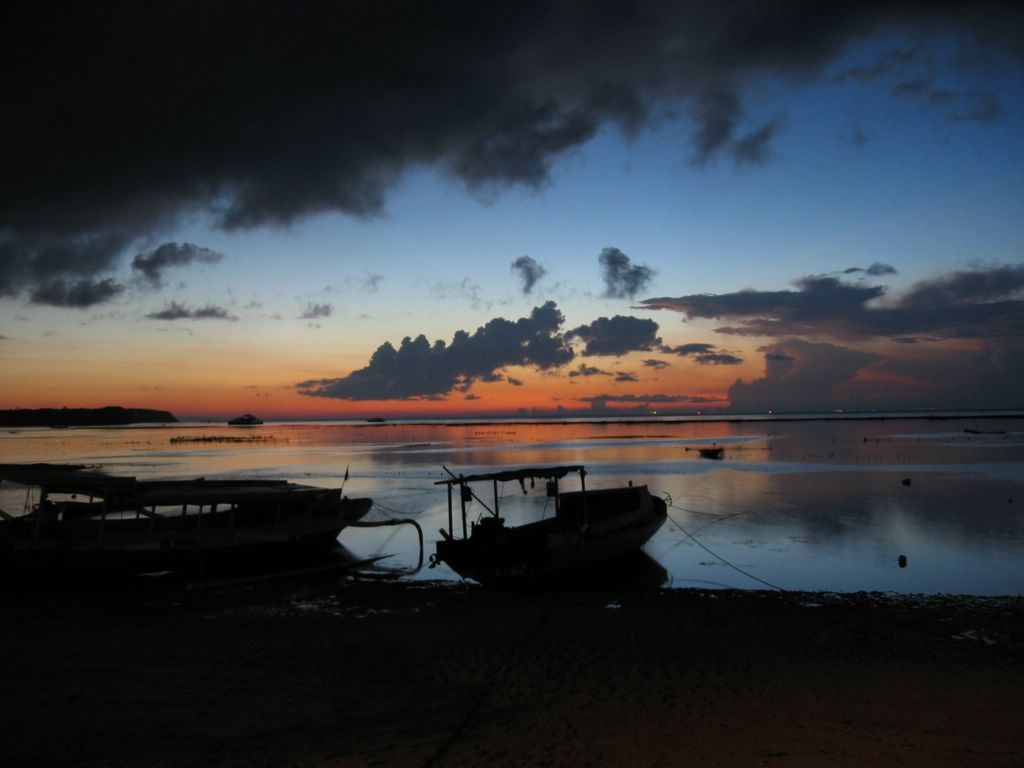
Nusa Lembongan is a quiet place to get away from the tourist hordes. I spent a relaxing three nights there in a room facing the water, which was about forty feet away (spectacular sunsets). I went on two dives for $45 with lunch included (it was just me and the divemaster). It was only my 12th dive or so, but it was definitely the best diving I've had yet. The diving was spectacular: warm water, fantastic visibility, undamaged coral, and lots of fish. We saw a couple sharks, sting rays, lobster, moray eels, and even grouper. It was really nice; much better than the places I had been to in Australia, probably because there were so few people that went diving in Nusa Lembongan. I also exceeded my nitrogen balance according to the dive tables by 15-minutes on my second dive (as well as my allowed depth with my open water certification), so no more dives after that! I also read a 700-page book while I was on the island; it was good to relax to the sound of the surf, and I got to know some of the Balinese a bit better (there weren't any tourists to talk to).
Indonesia is the fourth most populated nation in the world right after China, India, and America at 231 million (compared to 260 Americans). Indonesia is the largest archipegalo in the world with 17,000 islands. Provided you can get room and board included in your job, if you make 10k Rupiah a day, you're doing okay in Indonesia. That amounts to $1.10 a day. It costs 100k Rp a month to attend university, and that doesn't include books. Primary school through high school is "free", but it costs about 25k/month to pay for the uniforms and books. For a family of four kids, sometimes it's too expensive to continue going to school. I am not sure how a "third world country" (a bad term, I know) can progress to a first world nation, but I imagine it's hard when you can't afford school or even to save money. Where is the hope you have as a parent to make your children's lives better? I don't know, but I'm sure it's there. The Balinese I saw were extremely hard-working. Most of the people living on Nusa Lembongan were seaweed farmers. They grew seaweed and sold it so that it could be made into cosmetics and as a food thickener (and many other things...even your ice cream). They got up early and late with the low tides to tend to their plots, grids of string or netting pegged into the sand on which seaweed would grow (it takes about a month to grow), and used equipment that they fashioned out of junk. Almost nothing is prefabricated. These people had straw huts. I swear, I only thought it was a thing of Polynesian cultures in the movies, but they actually had huts and shacks made out of woven coconut palm fronds that they worked out of (and some of they used them as their homes). It is wierd to be travelling and seeing such "poverty", but it's all relative, I guess. Tourist guilt? Maybe.
From Nusa Lembongan, I took a tiny boat to Kusamba, a small village 5 km from Padangbai, the main port on the east coast. The boat was an 18-foot long canoe (about a meter across) with two outriggers and a makeshift mast with a sail. I have to admit I was sort of horrified as we piled more and more people on board (19 people in all). We had to make it through the breaking waves on the offshore reef! Well, the ride was cramped, hot, and long, but we made it to shore safe and sound. It's all part of the fun travelling in a third world country. You take tiny boats that could capsize; you ride in seemingly perilous traffic without seatbelts, or a helmet; you ride rusty ferries that, I'm sure, don't have enough lifejackets or room on lifeboats; but you know, it actually works, the majority of the time. What seems to be chaos and life-endangering, is a system that works; it's just because western eyes aren't adjusted to their norm. You can sit with knuckles gripped white, or just relax and try to enjoy the view as the world passes by. The age for riding a motorcycle? There is none. On Nusa Lembongan, there were 11 year kids riding kick-start bikes all over the place.
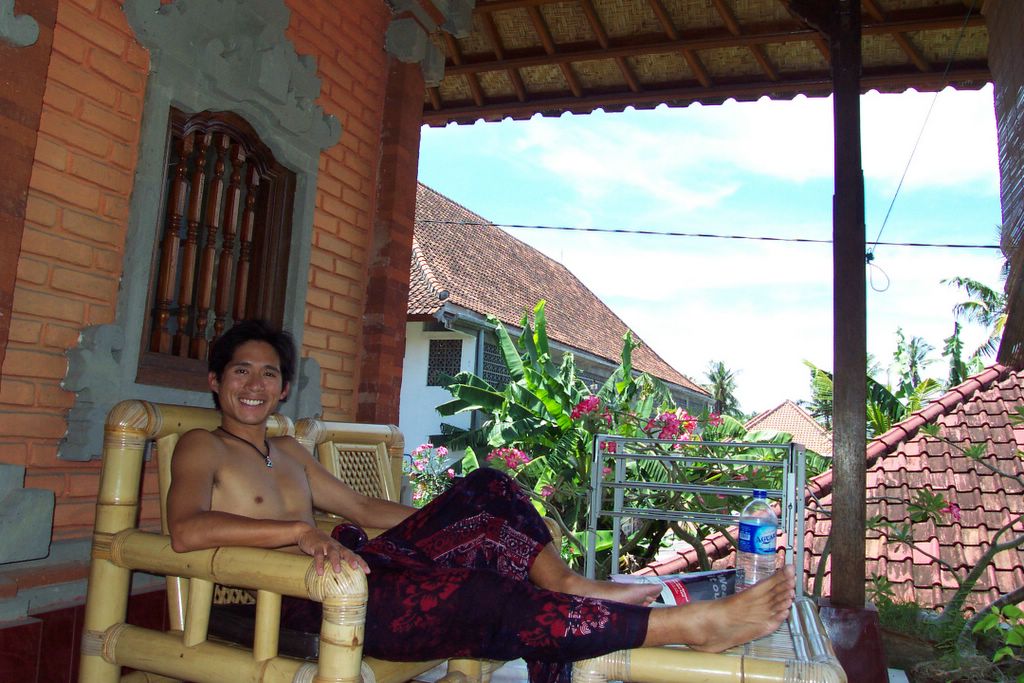
I took a bemo to Padangbai and avoided the touts and bought my ferry ticket for Lombok, a 4.5 hour ride awway. I sat and had some mystery meatball and noodle soup from a street cart for 33 cents to pass the time before the ferry left. The ferry was a filthy rust bucket. It was fun watching them manoeuvre the trucks and buses on board. While Bali was predominately Hindu, Lombok (and most of Indonesia) is Muslim. They had a room with prayer carpets for those who felt the need. There were seats inside, and even an open area where people just laid down. People can lie down and sleep anywhere. I still have a lot of squeamishness to get over before I will lay down like that, but I've got some time left. I sat outside watching people throw their cigarettes, empties bottles, and wrappers overboard. What the hell?! Oh well, I guess every culture does that. To be honest, rubbish bins are pretty uncommon, and I think all they do is pile the rubbish in an empty lot and burn it anyways. Yum. We went through a rain shower, and the locals started button up and putting on jackets. I swear I saw a guy wearing a thick down jacket. The temperature went from 90 F to 75 F so when you're not used to that, it can feel cold. I'm sweating most of the time wearing swimming trunks and a loose button shirt (yeah, the one in all my pictures), but the locals wear black slacks and long sleeve shirts and coats and knit caps sometimes. It goes to show you how the body can acclimate to any environment.
I am writing from Mataram, on the west side of Lombok, the island just east of Bali. I have decided to head east to Flores, four islands east of Lombok (past Sumbawa, Komodo, and Rinca the last two famous for seeing the Komodo dragons). It's going to be a long trip, and I booked a ticket the whole way there, so I wouldn't have to deal with about ten different bus changes and odd hours. I will get there tomorrow night. I don't know if there will be internet there, but I should be back next week.
The sunsets here ARE amazing. The water is so warm. The weather is fine. Kuta shows no signs of terrorist activity, dengue fever, or tsunami-flooding. I thought I would be here two days, but I will be here four. Tomorrow, I think I will head to Sanur and then to Nusa Lembongan, if I make it there early enough to catch the ferry. I am going there on the advice of Gerdes who was here a couple years ago.
There are loads of pirated DVDs/CDs/computer games and programs. Good GOD, there are a lot of pirated things here. They're sold for about $1.10 each, and if you buy ten, you get four free. People are leaving stores with bags of DVDs. It's quite an empire. I don't think the MPAA or RIAA can do anything about this.
I don't know how to start with describing this place, but I'll try to figure out a way and post something intelligible and with fewer typos.






.jpg)
.jpg)
.jpg)
.jpg)