The sunsets here ARE amazing. The water is so warm. The weather is fine. Kuta shows no signs of terrorist activity, dengue fever, or tsunami-flooding. I thought I would be here two days, but I will be here four. Tomorrow, I think I will head to Sanur and then to Nusa Lembongan, if I make it there early enough to catch the ferry. I am going there on the advice of Gerdes who was here a couple years ago.
There are loads of pirated DVDs/CDs/computer games and programs. Good GOD, there are a lot of pirated things here. They're sold for about $1.10 each, and if you buy ten, you get four free. People are leaving stores with bags of DVDs. It's quite an empire. I don't think the MPAA or RIAA can do anything about this.
I don't know how to start with describing this place, but I'll try to figure out a way and post something intelligible and with fewer typos.
Saturday, February 26, 2005
Leaving Kuta Beach

Wednesday, February 23, 2005

And suddenly you find yourself in Bali...
Just a quick nod to let you know I'm okay. I left Auckland at 0630 this morning, swapped planes in Sydney, and landed in Denpasar, Indonesia this afternoon. I'm currently staying at the infamous Kuta Beach, which is like the Phuket of Indonesia. Yes, it's tacky and touristy. But there are perfect sunsets every night, or so I've been told. My taxi cab ride came out to 80 cents when I split it with two Brits. My dinner of nasi goreng (fried rice with a fried egg on top) was 80 cents. A liter of water costs 30 cents. My hotel room, with private shower and Western toilet costs me 60,000 Rupiah...which is about $6.75. And it comes with breakfast. This has been a culture shock from New Zealand, but it's been fun so far. The Indonesians I've met are super-friendly. Yeah, they're all touts, trying to get me a cab or a hotel room, but they're also interested in just talking and practicing their English. And I'm learning some Balinese along the way. It's hot and humid here, which is perfect. My room has a ceiling fan, so I can watch the blades cut through the thick air and watch the sun's progress from the shadows of the shutters on the wall. Give me a full-length mirror, and I'm ready to channel Martin Sheen from Apocalypse Now.
Monday, February 21, 2005
New Zealand impressions
Crosswalk signals. The crosswalk signals in Australia and New Zealand have huge buttons. When depressed, they activate the crosswalk signal which shows the red man stopped. There is an audible sound which is slow (beep-pause-beep) for the visually impaired, I presume. When the signal shows the green man walking, the sound becomes faster (beep! beep! beep!) which makes you want to rush across the street. What I like most about the signals is that if the red man is showing, then you know someone has activated the crosswalk signal, so you don't have to press it, as you see so many people do when they come to a crosswalk. Unless, you're not in the big city, in which case, the crosswalks aren't as fancy.
zed. In Australia, New Zealand, the UK, and apparently, Canada, they pronounce the letter "z" as"zed", as opposed to "zee". I do not know why this is.
walking on the left-hand side of the sidewalk. The cars drive on the left-hand side of the road. The driver sits in the right side of the car. The gear box is a mirror image of what we have in the States. Why are the gas pedal and brake not reversed as well? This I do not know. When walking on the sidewalk, people are used to walking on the left-hand side. Invariably, you will annoy on-coming pedestrian traffic by walking on the right-hand side. (I once found myself drooling outside a Ferrari showroom in Sydney, and I happened to comment aloud that the steering wheels were on the wrong side. Someone turned around and said, "Where are YOU from?!", and I commented, "Um, like the rest of the world, dude.") In three months of travel through Australia and New Zealand, I have become less fearful of crossing streets, but when I see cars turning right, I still get confused to which lane they will be turning, which means I inevitably scurry across the road.
hot /cold water switch. Is it that hostels are built in shabby buildings or is this part of British sensibility? Sometimes the cold and hot water faucets are reversed from what I expect as normal. Sometimes the hot water is the right-hand faucet and othertimes not. The showers suffer the same confusion, which means, sometimes you have to test the water for a bit to see which side is less freezing, or you just take a nice combat shower.
cooking for myself or no kebabs for me in NZ. Shifting gears from Australia to New Zealand was interesting. Before coming to this side of the world, I did not have any notion of the differences between Australia and New Zealand. Australia (at least the East Coast) was full of backpackers and revellers, sunshine and warm water, and crowded towns with late-nights in backpacker bars. Arrival to the South Island was a bit like going from Bourbon Street in New Orleans to the Yukon territory in Canada. This made my travels in New Zealand that much different from my weeks in Australia. For instance, I didn't go to bars nearly as often (three times in six weeks), and I didn't eat kebabs every night (only once on my second night in New Zealand). I ended up buying groceries on my second day here and have carried a small amount of cooking supplies everyday since. In six weeks I have gone through one bottle of Kikkoman's soy sauce, a bottle of sesame oil, a jar of Nutella, 1.5 kg of pasta, four boxes of Weet-bix, and 6 kg of rice. The Vegemite jar I have is still half full. (There is a virtual graveyard of half full Vegemite jars, salt and pepper shakers, soy sauce, and cooking oil in this hostel.) Dinnertime in the backpackers I've stayed in have been far better for meeting people than the bars. It seems that most backpackers in New Zealand cook their own food, because this ends up being cheaper than eating out; the towns are not as large as they were in Australia, and there are not many places to get cheap food (i.e. kebab houses).
small hostels. A nice realization happened about a couple weeks into my travels here. I finally figured out that I preferred the smaller hostels to the larger ones. The large hostels (80-500 beds) tended to be institutional and filled with tourbus-loads of backpackers looking for the party. The small hostels (10-30 beds) were usually converted homes that were clean, homely, laid back, and ended up being great places to meet other travellers, with the added bonus of being less likely to get your possessions nicked since you got to meet everyone. The Russian Roulette experience of choosing a good place to stayl dramatically improved when I started looking for the smallest hostels in a town. The two biggest factors in how much I enjoyed a place were the weather and the people I met along the way. I had no control over the weather, but I could decide where to stay, and with better chances of meeting folks that were interesting.
Antoine Spaghetti. Speaking of interesting people, while I was on Waiheke Island, I stayed at a cool hostel with a great vibe, pool & spa, Buddha wood carvings, and nice teak furniture on the deck. There were mostly backpackers there, but three young Kiwis on a tree-clearing job (they call them "arborists" here) were staying there for the week. They were two half-Maori and one Pakeha (European settler) fella that seemed really out of place amongst the rest of the backpackers. I ended up befriending them and they took me out on their last night on the island and introduced me to Antoine Spaghetti. This was the 18-year old Pakeha's alter-ego when he got drunk (which, apparently, was every night back on the mainland). Antoine had the tendency to nick things (that's stealing, to you and me) like the cappuccino cup at the bar when it was closing time or the two blocks of cheese (brie and camembert) and can of motor oil he found in his pockets one morning. Antoine had an accent that was hard to place. It was sort of a bad French accent with an hint of Ukrainian. We got Antoine to sing during kareoke night at the local pub (the only place open after 10 pm on an island with a population of 8,500). Antoine's number was Billy Ocean's "Carribbean Queen", which was a big hit back in the early 80's, before Antoine was even born. Antoine was a trooper and stumbled through it mumbling and saying, "Yeah!" every now and again. The rest of the night was pretty much the same in the sense of randomness and meeting wackos and doing illcit things. This is the first time that I have been called out of a bar, so I could help some guys out, in case there was going to be a "rumble". Yeah, like I would be giving anyone the deciding advantage.
The Maori and Pakeha. There are 4.2 million New Zealanders and about 1.7 of them claim to be Maori (and about 40% can speak Maori). Many of them have one Pakeha parent and one Maori parent, but the Maori culture remains quite strong. Maori and English are both official languages of New Zealand, and government buildings and signs have their Maori translation next to the English ones. In the North Island, there is a much stronger Maori presence with "marae" or community houses in many places. I have been fascinated by the social dynamics between these two different cultures. Anthropologists believe that New Zealand was the last site of Polynesian migration (about 500-800 years ago) that started 8000 BC from southeastern China, beginning with the Aboriginal tribes in Taiwan to all of the Polynesian islands including Hawaii and Rapa Nui (Easter Island). New Zealand was also one the last places to be colonized by Europeans (about 200 years ago). From the point of view of the Pakeha, their history with the Maori and their continued relations bear under greater scrutiny than the Native Americans benefit in the States. Part of this is from the greater proportion of the population that is Maori, and part of this is from the emerging social awareness and cultural maturity that the European world was gaining at the time of their arrival. The settlers were far more conscious of the impact of colonists on an indigenous population. As a result, the Pakeha tries to make reparations for the grievances their foreparents made against the Maori. Likewise, the New Zealand land was dramatically changed by the introduction of the Maori a few hundred years ago (I have already mentioned the extinct moa, the flightless bird that grew up to 9 feet tall). The Maori came from small Polynesian islands where food was scarce to a land untouched by land-based mammals. Imagine that! The only mammal was a flying-fox, or a bat, as we know them. The moa, large as it was, had no predators, and could easily be slain by the Maori. Imagine walking up to a 9-foot tall bird and knocking it down! The Maori communities did not have to compete for natural resources early on because the land was so plentiful, but as the ecology was changed with the killing off of animals and changing of their habitats, food became more scarce and the iwi's (tribes) had to compete and build pa's (fortresses). When the Pakeha came, they introduced a wide range of animals and plants, but many of these have turned into scourges as these foreign flora and fauna have had no competitors or predators in the New Zealand ecosystem. So, modern New Zealand is very conscious and aware of the balance of the world and the impact they have had on their home.
travelling. Four months on the road, and I have finally settled in. Early on I worried about the day I would return to a job-based world. I worried about the difficulties I would have returning everyday. Even when I was in New Zealand, I worried about it, but sometime in the past few weeks I stopped fretting. I still think about it, but I don't worry. I would rather be doing this (travelling) alone, right now, than pretty much anything else. This is my job now. It's not a "job", like it's a hassle, and I can't wait for my next day off. It's my job, as in, "the thing I do". I remember when I had done some travelling before, how I marvelled at people who had one or two months off. Well, now those people marvel at me, because at the end of their two-month trip, they have to go home wanting more time off, and my trip is just beginning. I have met a lot of folks who have done more travelling than I have, but no one who has travelled the route I intend to take. There have been moments when I have been alone at a vista, after a hard hike to a peak, and I think, "This is what it's all about." New Zealand has been great for moments like that. I was a 100-meters underground, neck-deep in an river, pulling myself along, feeling the walls, and laughing in the amazement of being there, surrounded by a galaxy of glowworms. This world is so big. It's easy to forget how big it is when "Brad and Jen: the Break-up" makes the headlines.
the search of something or the search for nothing? "I hope you find what you're looking for." That's something I heard a few times from people before I took off. After four months, I can say I'm not looking for anything. It's an experience like going to school, working a job, getting married, or having kids. It's an experience that may or may not change me. I'm not looking for enlightenment. I'm not looking for the truth. I'm just doing this because it's something I enjoy, and I've wanted to do it for a long time (as opposed to getting married or having kids). Plus, there's the thrill and risk of a little danger and disembowelment, haha, although you could get that from marriage, I suppose. As for being alone, I have met a lot of solo travellers, and some of them can hack it, and some of them can't. Some of them are lonely and some of them struggle. I have yet to experience loneliness on the road, but it might happen. Often, I have found, I'm hardly alone because there's always someone to talk to. Travelling in Australia and New Zealand has been a great way to see a culture that is familiar to Americans, but a little different. Sometimes you see something and think it's a bit wierd or pig-headed, then you compare it to the analogy of what we have in the States, and you realize what we do in the States is sometimes a little wierd and pig-headed, and you open your mind to the strange being a little less strange, and the familiar, being a little strange.
zed. In Australia, New Zealand, the UK, and apparently, Canada, they pronounce the letter "z" as"zed", as opposed to "zee". I do not know why this is.
walking on the left-hand side of the sidewalk. The cars drive on the left-hand side of the road. The driver sits in the right side of the car. The gear box is a mirror image of what we have in the States. Why are the gas pedal and brake not reversed as well? This I do not know. When walking on the sidewalk, people are used to walking on the left-hand side. Invariably, you will annoy on-coming pedestrian traffic by walking on the right-hand side. (I once found myself drooling outside a Ferrari showroom in Sydney, and I happened to comment aloud that the steering wheels were on the wrong side. Someone turned around and said, "Where are YOU from?!", and I commented, "Um, like the rest of the world, dude.") In three months of travel through Australia and New Zealand, I have become less fearful of crossing streets, but when I see cars turning right, I still get confused to which lane they will be turning, which means I inevitably scurry across the road.
hot /cold water switch. Is it that hostels are built in shabby buildings or is this part of British sensibility? Sometimes the cold and hot water faucets are reversed from what I expect as normal. Sometimes the hot water is the right-hand faucet and othertimes not. The showers suffer the same confusion, which means, sometimes you have to test the water for a bit to see which side is less freezing, or you just take a nice combat shower.
cooking for myself or no kebabs for me in NZ. Shifting gears from Australia to New Zealand was interesting. Before coming to this side of the world, I did not have any notion of the differences between Australia and New Zealand. Australia (at least the East Coast) was full of backpackers and revellers, sunshine and warm water, and crowded towns with late-nights in backpacker bars. Arrival to the South Island was a bit like going from Bourbon Street in New Orleans to the Yukon territory in Canada. This made my travels in New Zealand that much different from my weeks in Australia. For instance, I didn't go to bars nearly as often (three times in six weeks), and I didn't eat kebabs every night (only once on my second night in New Zealand). I ended up buying groceries on my second day here and have carried a small amount of cooking supplies everyday since. In six weeks I have gone through one bottle of Kikkoman's soy sauce, a bottle of sesame oil, a jar of Nutella, 1.5 kg of pasta, four boxes of Weet-bix, and 6 kg of rice. The Vegemite jar I have is still half full. (There is a virtual graveyard of half full Vegemite jars, salt and pepper shakers, soy sauce, and cooking oil in this hostel.) Dinnertime in the backpackers I've stayed in have been far better for meeting people than the bars. It seems that most backpackers in New Zealand cook their own food, because this ends up being cheaper than eating out; the towns are not as large as they were in Australia, and there are not many places to get cheap food (i.e. kebab houses).
small hostels. A nice realization happened about a couple weeks into my travels here. I finally figured out that I preferred the smaller hostels to the larger ones. The large hostels (80-500 beds) tended to be institutional and filled with tourbus-loads of backpackers looking for the party. The small hostels (10-30 beds) were usually converted homes that were clean, homely, laid back, and ended up being great places to meet other travellers, with the added bonus of being less likely to get your possessions nicked since you got to meet everyone. The Russian Roulette experience of choosing a good place to stayl dramatically improved when I started looking for the smallest hostels in a town. The two biggest factors in how much I enjoyed a place were the weather and the people I met along the way. I had no control over the weather, but I could decide where to stay, and with better chances of meeting folks that were interesting.
Antoine Spaghetti. Speaking of interesting people, while I was on Waiheke Island, I stayed at a cool hostel with a great vibe, pool & spa, Buddha wood carvings, and nice teak furniture on the deck. There were mostly backpackers there, but three young Kiwis on a tree-clearing job (they call them "arborists" here) were staying there for the week. They were two half-Maori and one Pakeha (European settler) fella that seemed really out of place amongst the rest of the backpackers. I ended up befriending them and they took me out on their last night on the island and introduced me to Antoine Spaghetti. This was the 18-year old Pakeha's alter-ego when he got drunk (which, apparently, was every night back on the mainland). Antoine had the tendency to nick things (that's stealing, to you and me) like the cappuccino cup at the bar when it was closing time or the two blocks of cheese (brie and camembert) and can of motor oil he found in his pockets one morning. Antoine had an accent that was hard to place. It was sort of a bad French accent with an hint of Ukrainian. We got Antoine to sing during kareoke night at the local pub (the only place open after 10 pm on an island with a population of 8,500). Antoine's number was Billy Ocean's "Carribbean Queen", which was a big hit back in the early 80's, before Antoine was even born. Antoine was a trooper and stumbled through it mumbling and saying, "Yeah!" every now and again. The rest of the night was pretty much the same in the sense of randomness and meeting wackos and doing illcit things. This is the first time that I have been called out of a bar, so I could help some guys out, in case there was going to be a "rumble". Yeah, like I would be giving anyone the deciding advantage.
The Maori and Pakeha. There are 4.2 million New Zealanders and about 1.7 of them claim to be Maori (and about 40% can speak Maori). Many of them have one Pakeha parent and one Maori parent, but the Maori culture remains quite strong. Maori and English are both official languages of New Zealand, and government buildings and signs have their Maori translation next to the English ones. In the North Island, there is a much stronger Maori presence with "marae" or community houses in many places. I have been fascinated by the social dynamics between these two different cultures. Anthropologists believe that New Zealand was the last site of Polynesian migration (about 500-800 years ago) that started 8000 BC from southeastern China, beginning with the Aboriginal tribes in Taiwan to all of the Polynesian islands including Hawaii and Rapa Nui (Easter Island). New Zealand was also one the last places to be colonized by Europeans (about 200 years ago). From the point of view of the Pakeha, their history with the Maori and their continued relations bear under greater scrutiny than the Native Americans benefit in the States. Part of this is from the greater proportion of the population that is Maori, and part of this is from the emerging social awareness and cultural maturity that the European world was gaining at the time of their arrival. The settlers were far more conscious of the impact of colonists on an indigenous population. As a result, the Pakeha tries to make reparations for the grievances their foreparents made against the Maori. Likewise, the New Zealand land was dramatically changed by the introduction of the Maori a few hundred years ago (I have already mentioned the extinct moa, the flightless bird that grew up to 9 feet tall). The Maori came from small Polynesian islands where food was scarce to a land untouched by land-based mammals. Imagine that! The only mammal was a flying-fox, or a bat, as we know them. The moa, large as it was, had no predators, and could easily be slain by the Maori. Imagine walking up to a 9-foot tall bird and knocking it down! The Maori communities did not have to compete for natural resources early on because the land was so plentiful, but as the ecology was changed with the killing off of animals and changing of their habitats, food became more scarce and the iwi's (tribes) had to compete and build pa's (fortresses). When the Pakeha came, they introduced a wide range of animals and plants, but many of these have turned into scourges as these foreign flora and fauna have had no competitors or predators in the New Zealand ecosystem. So, modern New Zealand is very conscious and aware of the balance of the world and the impact they have had on their home.
travelling. Four months on the road, and I have finally settled in. Early on I worried about the day I would return to a job-based world. I worried about the difficulties I would have returning everyday. Even when I was in New Zealand, I worried about it, but sometime in the past few weeks I stopped fretting. I still think about it, but I don't worry. I would rather be doing this (travelling) alone, right now, than pretty much anything else. This is my job now. It's not a "job", like it's a hassle, and I can't wait for my next day off. It's my job, as in, "the thing I do". I remember when I had done some travelling before, how I marvelled at people who had one or two months off. Well, now those people marvel at me, because at the end of their two-month trip, they have to go home wanting more time off, and my trip is just beginning. I have met a lot of folks who have done more travelling than I have, but no one who has travelled the route I intend to take. There have been moments when I have been alone at a vista, after a hard hike to a peak, and I think, "This is what it's all about." New Zealand has been great for moments like that. I was a 100-meters underground, neck-deep in an river, pulling myself along, feeling the walls, and laughing in the amazement of being there, surrounded by a galaxy of glowworms. This world is so big. It's easy to forget how big it is when "Brad and Jen: the Break-up" makes the headlines.
the search of something or the search for nothing? "I hope you find what you're looking for." That's something I heard a few times from people before I took off. After four months, I can say I'm not looking for anything. It's an experience like going to school, working a job, getting married, or having kids. It's an experience that may or may not change me. I'm not looking for enlightenment. I'm not looking for the truth. I'm just doing this because it's something I enjoy, and I've wanted to do it for a long time (as opposed to getting married or having kids). Plus, there's the thrill and risk of a little danger and disembowelment, haha, although you could get that from marriage, I suppose. As for being alone, I have met a lot of solo travellers, and some of them can hack it, and some of them can't. Some of them are lonely and some of them struggle. I have yet to experience loneliness on the road, but it might happen. Often, I have found, I'm hardly alone because there's always someone to talk to. Travelling in Australia and New Zealand has been a great way to see a culture that is familiar to Americans, but a little different. Sometimes you see something and think it's a bit wierd or pig-headed, then you compare it to the analogy of what we have in the States, and you realize what we do in the States is sometimes a little wierd and pig-headed, and you open your mind to the strange being a little less strange, and the familiar, being a little strange.
Thursday, February 17, 2005
.jpg)
.jpg)
.jpg)
.jpg)
Waiheke Island
I ended up going to a Maori Village while in Rotorua to attend a show and to enjoy a nice hangi. A hangi is the way the Maori used to cook feasts. This involved heating up rocks in a fire, throwing it in a deep hole with some food, and covering the hole with wet leaves to let the steam cook the food. The dance and show was pretty awesome. They showed us a haka, which is their war dance, and all their different weapons and tactics. The food was pretty good as well. We had some chicken, lamb, potato, and kumara, a type of sweet potato. I stuffed myself.
The next day I headed to Waitomo Caves, an area with a lot of limestone sinkholes. I signed up for the Ultimate Lost World tour with Waitomo Adventures. This was a seven-hour trip with a 100 m rappel into a huge hole. It was great. We then hiked upstream through an underground cave and river. We wore helmets, headlamps, and thick wetsuits. The water was pretty cold, but the wetsuits were thick. We ended up crawling, climbing, swimming, and jumping off of waterfalls, all underground. When we turned off our headlamps, all we could see were glowworms, small pinpoint maggots on the walls. It was a blast. Hours later, we came out of a cave, two kilometers from our starting point. We finished the day with a nice barbecue.
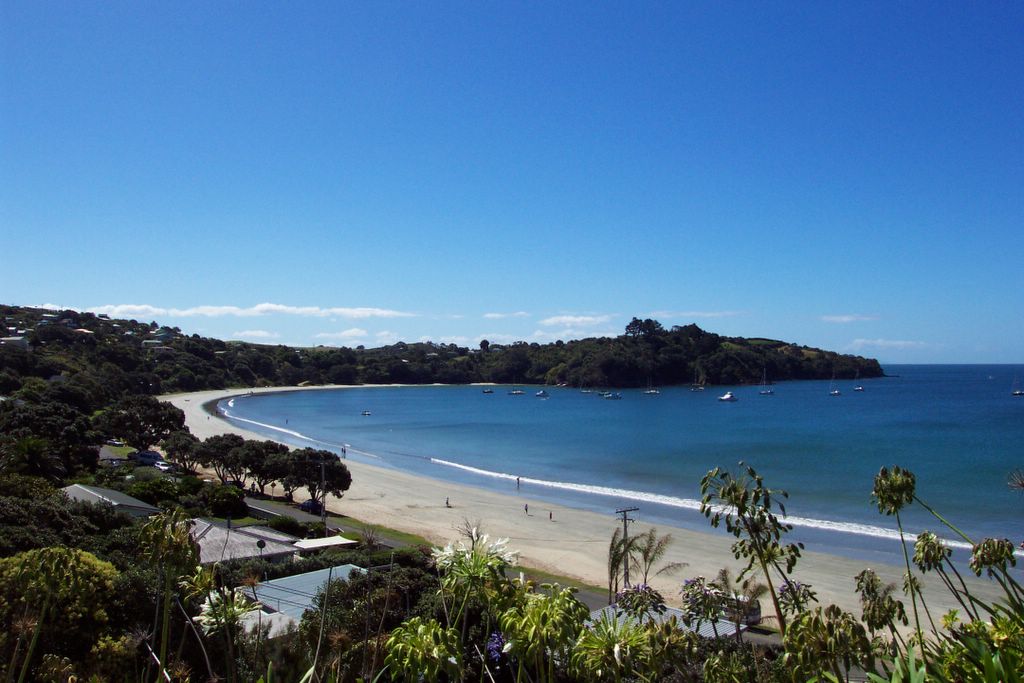
The next day I took a four hour bus trip to Auckland, and then walked to the wharf to take a ferry to Waiheke Island. Waiheke Island is a large island in the Hauraki Gulf. The ferry ride is about 35 minutes long and takes you so far away from the city. I had planned on being here for three nights, but I've decided to spend six nights here. There are many coves and hidden beaches here, most of them are next to million dollar estates, summer homes for the elite of Auckland. There is wonderfully, not much to do here, so I have been relaxing and preparing for the next phase of my trip. In a couple days I will head to Auckland, and then after that...you'll see.
The next day I headed to Waitomo Caves, an area with a lot of limestone sinkholes. I signed up for the Ultimate Lost World tour with Waitomo Adventures. This was a seven-hour trip with a 100 m rappel into a huge hole. It was great. We then hiked upstream through an underground cave and river. We wore helmets, headlamps, and thick wetsuits. The water was pretty cold, but the wetsuits were thick. We ended up crawling, climbing, swimming, and jumping off of waterfalls, all underground. When we turned off our headlamps, all we could see were glowworms, small pinpoint maggots on the walls. It was a blast. Hours later, we came out of a cave, two kilometers from our starting point. We finished the day with a nice barbecue.
The next day I took a four hour bus trip to Auckland, and then walked to the wharf to take a ferry to Waiheke Island. Waiheke Island is a large island in the Hauraki Gulf. The ferry ride is about 35 minutes long and takes you so far away from the city. I had planned on being here for three nights, but I've decided to spend six nights here. There are many coves and hidden beaches here, most of them are next to million dollar estates, summer homes for the elite of Auckland. There is wonderfully, not much to do here, so I have been relaxing and preparing for the next phase of my trip. In a couple days I will head to Auckland, and then after that...you'll see.



Sunday, February 13, 2005
Tongariro and Taupo
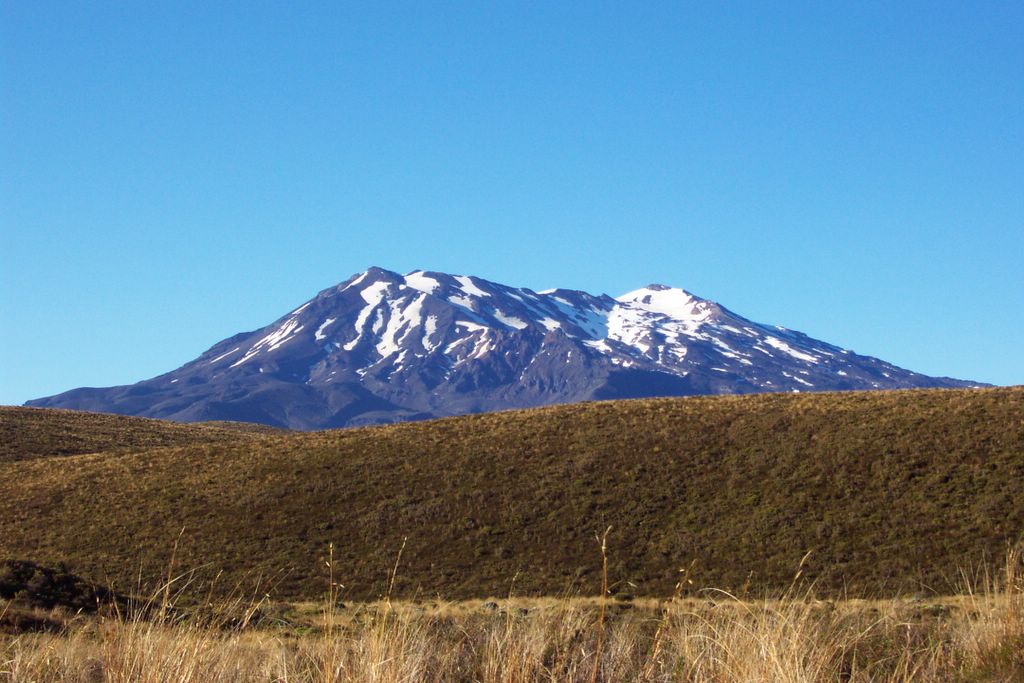
I went to National Park Village after Wellington. I was there to do the Tongariro Crossing. It's a 17 km hike between Mt. Tongariro and Mt. Ngauruhoe. This is supposed to be the best one-day hike in the North Island, but it's often shrouded in clouds. When I got there it was raining, and the weather forecast predicted clouds for the next day, so I hitchhiked to the Mt. Ruapehu ski lifts about 15 km from National Park Village. They filmed some more the LOTR movies there, but I couldn't tell you where or what. Mt. Ruapehu, like all the other mountains in the region, are volcanos. Mt. Ruapehu last erupted in 1996. It doesn't have a proper peak, but it does have a huge crater, so I hiked up through the ski resort to the crater rim, where I found myself in a near-total white out. Visibility was about 20 meters, so I decided to find my way back down in the mist.
The next day I went and hiked the Tongariro Crossing. It was pretty crowded on the track. I made a side trip to hike to the top of Mt. Ngauruhoe, which was used as Mt. Doom. The clouds came in halfway up the peak, so I didn't get much of a view, but I had a blast sliding down the scree slope to the bottom. The Tongariro Crossing track was amazing passing though a couple craters and steaming volcanic vents.
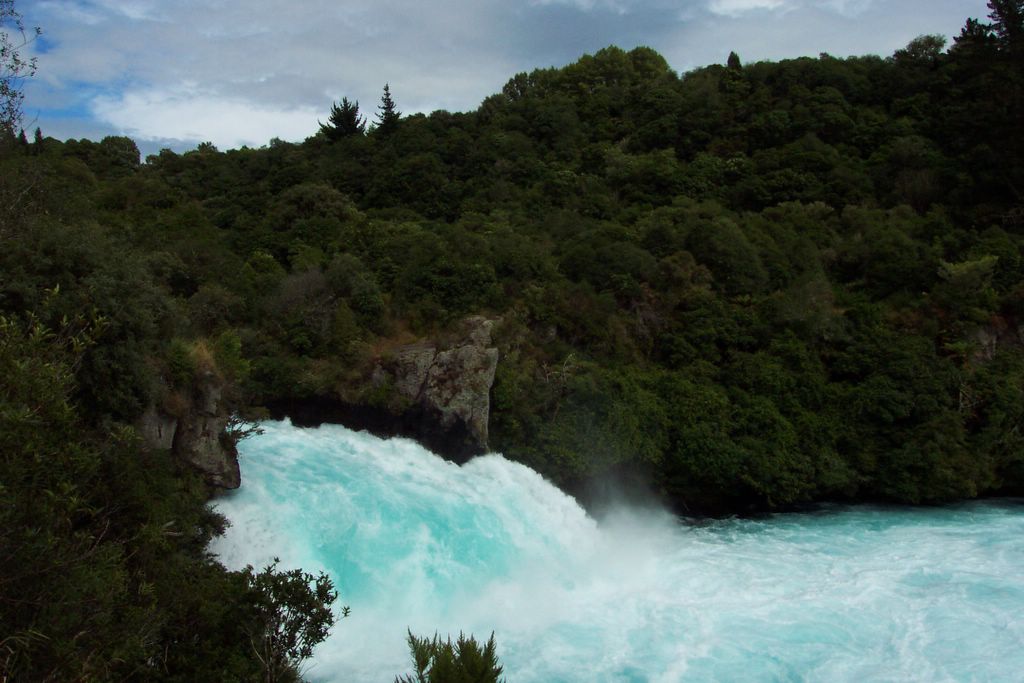
The next day I went to Taupo, a city on the northern edge of Lake Taupo, the largest lake in New Zealand. It is stocked with California Rainbow Trout. These monsters are huge compared to the ones in California. I am not sure why. They get up to 20 lbs, I am told. They look like salmon. I didn't do any fishing, but I hiked to a place called Craters of the Moon, which was another geothermic area where I could see (and smell) steaming vents and bubbling mudpools. I also walked to Huka Falls, which is on the Waikato River, which empties out of Lake Taupo. The Falls were very impressive, if not exactly high. The river narrowed from 100 m across to 10 m across, making a very turbulent channel. I also got to bathe in the natural spa that emptied into the pristine waters of the river. That was pretty cool.
I came to Rotorua last night. This is known as Sulfur City because it's sitting in a huge crater and there are geothermic hot springs everywhere. Everywhere? yeah, like in people's yards and stuff. It's funny because if you have a hot spring on your property, you just throw some rocks on it so you know not to walk over the vent and burn yourself. It also stinks like rotten eggs here, but it's not as bad as it sounds. Well, maybe it is.
I am not sure where I will be going next, but chances are I'll be headed to the Waitomo Caves to do some caving.
The next day I went and hiked the Tongariro Crossing. It was pretty crowded on the track. I made a side trip to hike to the top of Mt. Ngauruhoe, which was used as Mt. Doom. The clouds came in halfway up the peak, so I didn't get much of a view, but I had a blast sliding down the scree slope to the bottom. The Tongariro Crossing track was amazing passing though a couple craters and steaming volcanic vents.
The next day I went to Taupo, a city on the northern edge of Lake Taupo, the largest lake in New Zealand. It is stocked with California Rainbow Trout. These monsters are huge compared to the ones in California. I am not sure why. They get up to 20 lbs, I am told. They look like salmon. I didn't do any fishing, but I hiked to a place called Craters of the Moon, which was another geothermic area where I could see (and smell) steaming vents and bubbling mudpools. I also walked to Huka Falls, which is on the Waikato River, which empties out of Lake Taupo. The Falls were very impressive, if not exactly high. The river narrowed from 100 m across to 10 m across, making a very turbulent channel. I also got to bathe in the natural spa that emptied into the pristine waters of the river. That was pretty cool.
I came to Rotorua last night. This is known as Sulfur City because it's sitting in a huge crater and there are geothermic hot springs everywhere. Everywhere? yeah, like in people's yards and stuff. It's funny because if you have a hot spring on your property, you just throw some rocks on it so you know not to walk over the vent and burn yourself. It also stinks like rotten eggs here, but it's not as bad as it sounds. Well, maybe it is.
I am not sure where I will be going next, but chances are I'll be headed to the Waitomo Caves to do some caving.


Subscribe to:
Posts (Atom)