Saturday, March 05, 2005


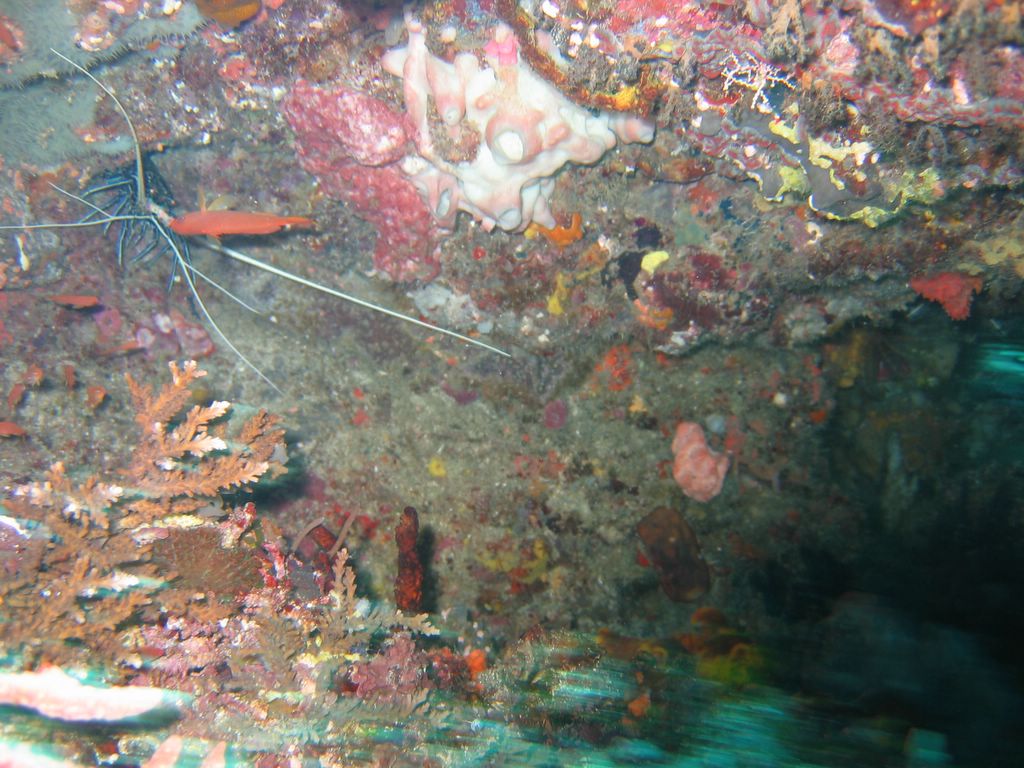
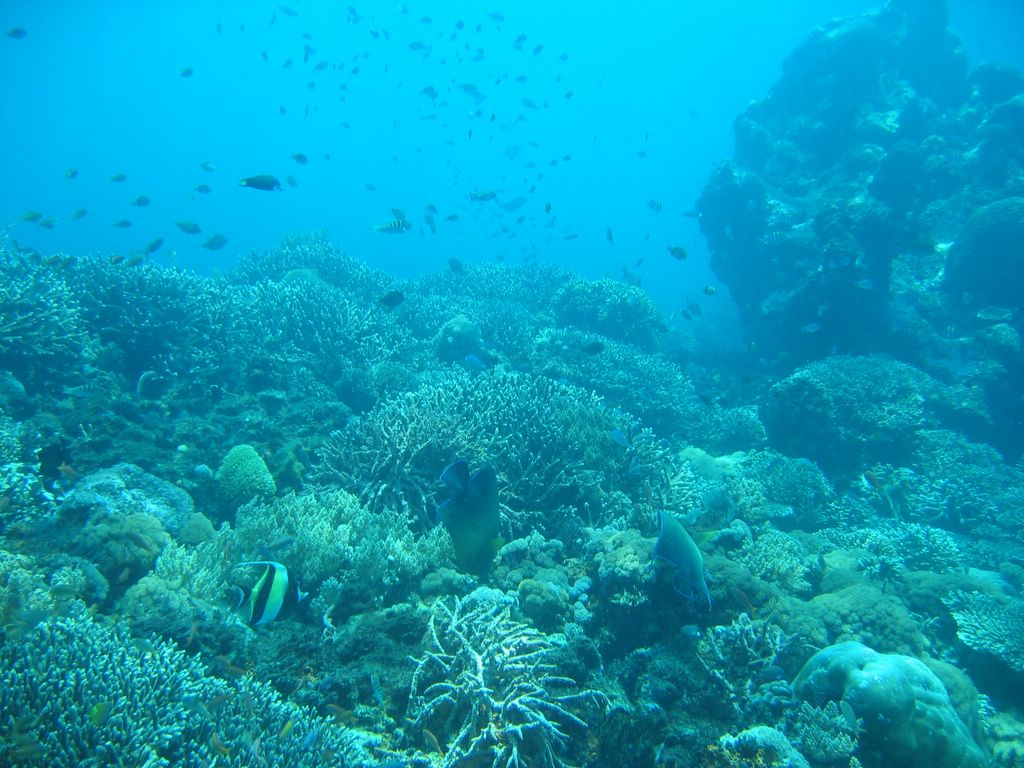
Good visibility in the warm waters off of Nusa Lembongan and the coral wasn't damaged.

Diving at Penita Point. A lobster in its hole. I really suck at underwater photos, but what a difference when you use a flash up close. The colors really leap out.

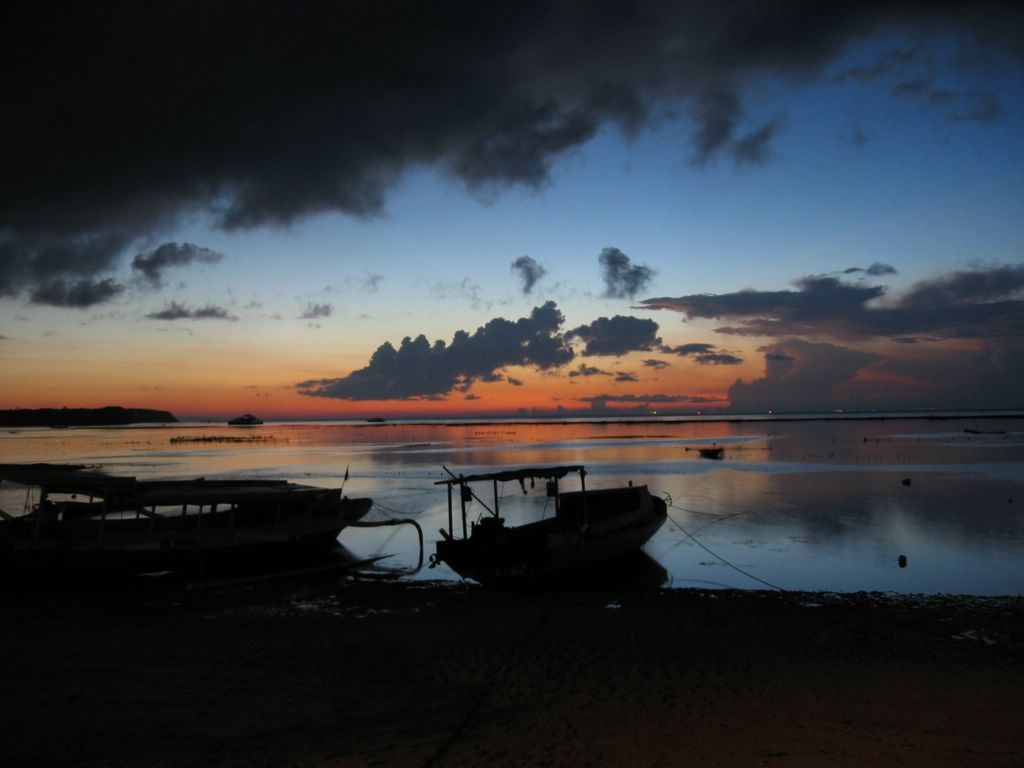
Dusk from Nusa Lembongan. Daily spectacular sunsets for free.

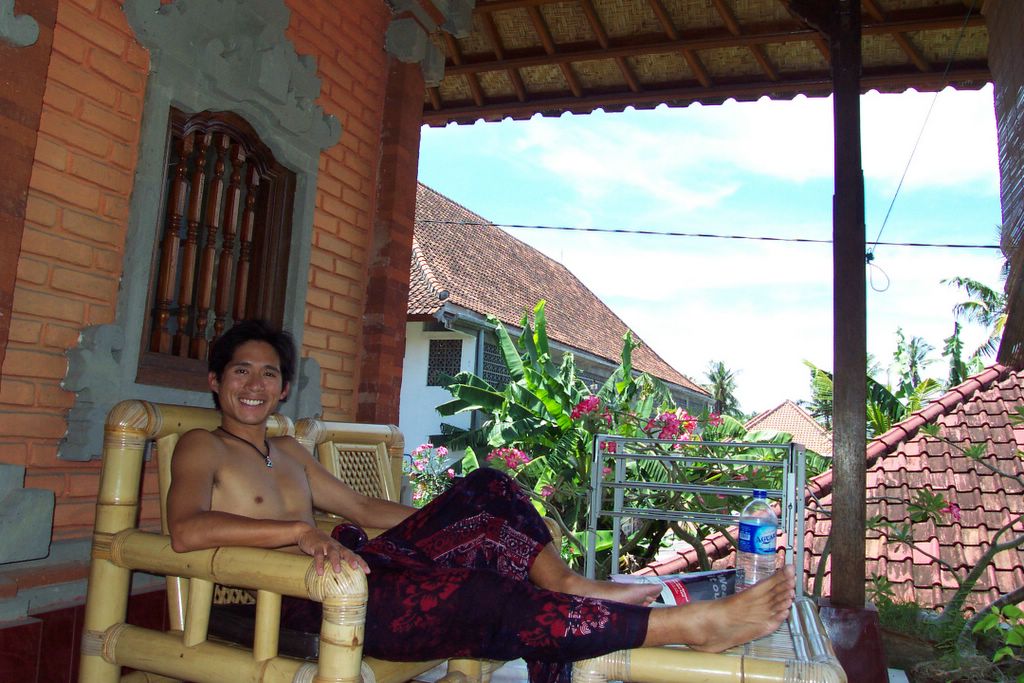
Me, Bali'ed-out in my sarong, on my balcony in Sanur.

Headed to Flores

Kuta is a big tourist town for Australians and Europeans. There were loads of tourist shops, bars, and losmans (guesthouses). Everywhere touts were trying to get my attention for "transport?" or renting a motorcycle or marijuana. It was fun and exciting to be there, but also exhausting from being assaulted every few feet. Lots of people come to Bali to get drunk and party in Kuta, but I was getting tired of that place and had to leave.
From Kuta, I was able to catch a ride on a couple bemos to Sanur. "Bemos" are minivans that drive around looking for people to pick up. It's the public transportation system to get around short distances (and even long ones). Basically they have benches built into the back of the minivans and drive around with their door open, always slowing down and honking, to pickup more passengers. I learned a few Balinese phrases and the numbers in Indonesian, so I was able to bargain and get the local price for part of the trip to Sanur; most bemo drivers can't speak English so it helps to learn some Indonesian. Speaking the local language, specifically Balinese, always put a smile on the faces of the locals. There are about 300 different languages in Indonesia (different languages, not just dialects), but the official language is Indonesian. I learned simple phrases which sometimes impressed the locals into giving me a fairer price or maybe confused them into thinking I was living here.
Sanur is on the east coast of the small peninsula that is on the southern part of Bali. I was there to catch a boat to Nusa Lembongan. There were fewer tourists in Sanur, but it was more "up-scale" with big resorts there. I was able to get some food at the local night market; no tourists there! I had some "es campur" which is shaved ice with mixed toppings of syrup and candied and jellied stuff (I really don't know what was in it). There were bees and flies buzzing around, and the hygiene wasn't what we would consider acceptable in the States, but then again, if you've worked in the food industry back home, you know there's a reason why you can't see the kitchen in most restaurants. Anyways, it was refreshing to have something cold in the sweltering heat of the tropics. I had some nasi goreng (a big plateful of fried rice) cooked right in front of me on a huge wok. It was fantastic. I was dripping even more sweat from the raw chili peppers I was eating with the rice. The total cost: 75 cents. It sure beats the prices at the tourist places (5-8 times the local price), which is still cheap, but a rip off considering what they should be paying.
The next morning I took a public ferry to Nusa Lembongan, one of three islands just off the southeastern coast of Bali The boat was long and had two outriggers for support (thank goodness!) and three outboard engines. We putted along for about two hours to get to the islands which were about 14 miles away. I paid the set tourist price of 33k Rupiah (the locals pay 10k).
Nusa Lembongan is a quiet place to get away from the tourist hordes. I spent a relaxing three nights there in a room facing the water, which was about forty feet away (spectacular sunsets). I went on two dives for $45 with lunch included (it was just me and the divemaster). It was only my 12th dive or so, but it was definitely the best diving I've had yet. The diving was spectacular: warm water, fantastic visibility, undamaged coral, and lots of fish. We saw a couple sharks, sting rays, lobster, moray eels, and even grouper. It was really nice; much better than the places I had been to in Australia, probably because there were so few people that went diving in Nusa Lembongan. I also exceeded my nitrogen balance according to the dive tables by 15-minutes on my second dive (as well as my allowed depth with my open water certification), so no more dives after that! I also read a 700-page book while I was on the island; it was good to relax to the sound of the surf, and I got to know some of the Balinese a bit better (there weren't any tourists to talk to).
Indonesia is the fourth most populated nation in the world right after China, India, and America at 231 million (compared to 260 Americans). Indonesia is the largest archipegalo in the world with 17,000 islands. Provided you can get room and board included in your job, if you make 10k Rupiah a day, you're doing okay in Indonesia. That amounts to $1.10 a day. It costs 100k Rp a month to attend university, and that doesn't include books. Primary school through high school is "free", but it costs about 25k/month to pay for the uniforms and books. For a family of four kids, sometimes it's too expensive to continue going to school. I am not sure how a "third world country" (a bad term, I know) can progress to a first world nation, but I imagine it's hard when you can't afford school or even to save money. Where is the hope you have as a parent to make your children's lives better? I don't know, but I'm sure it's there. The Balinese I saw were extremely hard-working. Most of the people living on Nusa Lembongan were seaweed farmers. They grew seaweed and sold it so that it could be made into cosmetics and as a food thickener (and many other things...even your ice cream). They got up early and late with the low tides to tend to their plots, grids of string or netting pegged into the sand on which seaweed would grow (it takes about a month to grow), and used equipment that they fashioned out of junk. Almost nothing is prefabricated. These people had straw huts. I swear, I only thought it was a thing of Polynesian cultures in the movies, but they actually had huts and shacks made out of woven coconut palm fronds that they worked out of (and some of they used them as their homes). It is wierd to be travelling and seeing such "poverty", but it's all relative, I guess. Tourist guilt? Maybe.
From Nusa Lembongan, I took a tiny boat to Kusamba, a small village 5 km from Padangbai, the main port on the east coast. The boat was an 18-foot long canoe (about a meter across) with two outriggers and a makeshift mast with a sail. I have to admit I was sort of horrified as we piled more and more people on board (19 people in all). We had to make it through the breaking waves on the offshore reef! Well, the ride was cramped, hot, and long, but we made it to shore safe and sound. It's all part of the fun travelling in a third world country. You take tiny boats that could capsize; you ride in seemingly perilous traffic without seatbelts, or a helmet; you ride rusty ferries that, I'm sure, don't have enough lifejackets or room on lifeboats; but you know, it actually works, the majority of the time. What seems to be chaos and life-endangering, is a system that works; it's just because western eyes aren't adjusted to their norm. You can sit with knuckles gripped white, or just relax and try to enjoy the view as the world passes by. The age for riding a motorcycle? There is none. On Nusa Lembongan, there were 11 year kids riding kick-start bikes all over the place.
I took a bemo to Padangbai and avoided the touts and bought my ferry ticket for Lombok, a 4.5 hour ride awway. I sat and had some mystery meatball and noodle soup from a street cart for 33 cents to pass the time before the ferry left. The ferry was a filthy rust bucket. It was fun watching them manoeuvre the trucks and buses on board. While Bali was predominately Hindu, Lombok (and most of Indonesia) is Muslim. They had a room with prayer carpets for those who felt the need. There were seats inside, and even an open area where people just laid down. People can lie down and sleep anywhere. I still have a lot of squeamishness to get over before I will lay down like that, but I've got some time left. I sat outside watching people throw their cigarettes, empties bottles, and wrappers overboard. What the hell?! Oh well, I guess every culture does that. To be honest, rubbish bins are pretty uncommon, and I think all they do is pile the rubbish in an empty lot and burn it anyways. Yum. We went through a rain shower, and the locals started button up and putting on jackets. I swear I saw a guy wearing a thick down jacket. The temperature went from 90 F to 75 F so when you're not used to that, it can feel cold. I'm sweating most of the time wearing swimming trunks and a loose button shirt (yeah, the one in all my pictures), but the locals wear black slacks and long sleeve shirts and coats and knit caps sometimes. It goes to show you how the body can acclimate to any environment.
I am writing from Mataram, on the west side of Lombok, the island just east of Bali. I have decided to head east to Flores, four islands east of Lombok (past Sumbawa, Komodo, and Rinca the last two famous for seeing the Komodo dragons). It's going to be a long trip, and I booked a ticket the whole way there, so I wouldn't have to deal with about ten different bus changes and odd hours. I will get there tomorrow night. I don't know if there will be internet there, but I should be back next week.

Saturday, February 26, 2005

Leaving Kuta Beach

The sunsets here ARE amazing. The water is so warm. The weather is fine. Kuta shows no signs of terrorist activity, dengue fever, or tsunami-flooding. I thought I would be here two days, but I will be here four. Tomorrow, I think I will head to Sanur and then to Nusa Lembongan, if I make it there early enough to catch the ferry. I am going there on the advice of Gerdes who was here a couple years ago.
There are loads of pirated DVDs/CDs/computer games and programs. Good GOD, there are a lot of pirated things here. They're sold for about $1.10 each, and if you buy ten, you get four free. People are leaving stores with bags of DVDs. It's quite an empire. I don't think the MPAA or RIAA can do anything about this.
I don't know how to start with describing this place, but I'll try to figure out a way and post something intelligible and with fewer typos.

Wednesday, February 23, 2005


Kuta Beach at Bali. The waves weren't big, but they're good enough for beginners. For the bigger waves, you have to hire a boat to take you to the offshore reef break.

And suddenly you find yourself in Bali...

Just a quick nod to let you know I'm okay. I left Auckland at 0630 this morning, swapped planes in Sydney, and landed in Denpasar, Indonesia this afternoon. I'm currently staying at the infamous Kuta Beach, which is like the Phuket of Indonesia. Yes, it's tacky and touristy. But there are perfect sunsets every night, or so I've been told. My taxi cab ride came out to 80 cents when I split it with two Brits. My dinner of nasi goreng (fried rice with a fried egg on top) was 80 cents. A liter of water costs 30 cents. My hotel room, with private shower and Western toilet costs me 60,000 Rupiah...which is about $6.75. And it comes with breakfast. This has been a culture shock from New Zealand, but it's been fun so far. The Indonesians I've met are super-friendly. Yeah, they're all touts, trying to get me a cab or a hotel room, but they're also interested in just talking and practicing their English. And I'm learning some Balinese along the way. It's hot and humid here, which is perfect. My room has a ceiling fan, so I can watch the blades cut through the thick air and watch the sun's progress from the shadows of the shutters on the wall. Give me a full-length mirror, and I'm ready to channel Martin Sheen from Apocalypse Now.

Monday, February 21, 2005

New Zealand impressions

Crosswalk signals. The crosswalk signals in Australia and New Zealand have huge buttons. When depressed, they activate the crosswalk signal which shows the red man stopped. There is an audible sound which is slow (beep-pause-beep) for the visually impaired, I presume. When the signal shows the green man walking, the sound becomes faster (beep! beep! beep!) which makes you want to rush across the street. What I like most about the signals is that if the red man is showing, then you know someone has activated the crosswalk signal, so you don't have to press it, as you see so many people do when they come to a crosswalk. Unless, you're not in the big city, in which case, the crosswalks aren't as fancy.

zed. In Australia, New Zealand, the UK, and apparently, Canada, they pronounce the letter "z" as"zed", as opposed to "zee". I do not know why this is.

walking on the left-hand side of the sidewalk. The cars drive on the left-hand side of the road. The driver sits in the right side of the car. The gear box is a mirror image of what we have in the States. Why are the gas pedal and brake not reversed as well? This I do not know. When walking on the sidewalk, people are used to walking on the left-hand side. Invariably, you will annoy on-coming pedestrian traffic by walking on the right-hand side. (I once found myself drooling outside a Ferrari showroom in Sydney, and I happened to comment aloud that the steering wheels were on the wrong side. Someone turned around and said, "Where are YOU from?!", and I commented, "Um, like the rest of the world, dude.") In three months of travel through Australia and New Zealand, I have become less fearful of crossing streets, but when I see cars turning right, I still get confused to which lane they will be turning, which means I inevitably scurry across the road.

hot /cold water switch. Is it that hostels are built in shabby buildings or is this part of British sensibility? Sometimes the cold and hot water faucets are reversed from what I expect as normal. Sometimes the hot water is the right-hand faucet and othertimes not. The showers suffer the same confusion, which means, sometimes you have to test the water for a bit to see which side is less freezing, or you just take a nice combat shower.

cooking for myself or no kebabs for me in NZ. Shifting gears from Australia to New Zealand was interesting. Before coming to this side of the world, I did not have any notion of the differences between Australia and New Zealand. Australia (at least the East Coast) was full of backpackers and revellers, sunshine and warm water, and crowded towns with late-nights in backpacker bars. Arrival to the South Island was a bit like going from Bourbon Street in New Orleans to the Yukon territory in Canada. This made my travels in New Zealand that much different from my weeks in Australia. For instance, I didn't go to bars nearly as often (three times in six weeks), and I didn't eat kebabs every night (only once on my second night in New Zealand). I ended up buying groceries on my second day here and have carried a small amount of cooking supplies everyday since. In six weeks I have gone through one bottle of Kikkoman's soy sauce, a bottle of sesame oil, a jar of Nutella, 1.5 kg of pasta, four boxes of Weet-bix, and 6 kg of rice. The Vegemite jar I have is still half full. (There is a virtual graveyard of half full Vegemite jars, salt and pepper shakers, soy sauce, and cooking oil in this hostel.) Dinnertime in the backpackers I've stayed in have been far better for meeting people than the bars. It seems that most backpackers in New Zealand cook their own food, because this ends up being cheaper than eating out; the towns are not as large as they were in Australia, and there are not many places to get cheap food (i.e. kebab houses).

small hostels. A nice realization happened about a couple weeks into my travels here. I finally figured out that I preferred the smaller hostels to the larger ones. The large hostels (80-500 beds) tended to be institutional and filled with tourbus-loads of backpackers looking for the party. The small hostels (10-30 beds) were usually converted homes that were clean, homely, laid back, and ended up being great places to meet other travellers, with the added bonus of being less likely to get your possessions nicked since you got to meet everyone. The Russian Roulette experience of choosing a good place to stayl dramatically improved when I started looking for the smallest hostels in a town. The two biggest factors in how much I enjoyed a place were the weather and the people I met along the way. I had no control over the weather, but I could decide where to stay, and with better chances of meeting folks that were interesting.

Antoine Spaghetti. Speaking of interesting people, while I was on Waiheke Island, I stayed at a cool hostel with a great vibe, pool & spa, Buddha wood carvings, and nice teak furniture on the deck. There were mostly backpackers there, but three young Kiwis on a tree-clearing job (they call them "arborists" here) were staying there for the week. They were two half-Maori and one Pakeha (European settler) fella that seemed really out of place amongst the rest of the backpackers. I ended up befriending them and they took me out on their last night on the island and introduced me to Antoine Spaghetti. This was the 18-year old Pakeha's alter-ego when he got drunk (which, apparently, was every night back on the mainland). Antoine had the tendency to nick things (that's stealing, to you and me) like the cappuccino cup at the bar when it was closing time or the two blocks of cheese (brie and camembert) and can of motor oil he found in his pockets one morning. Antoine had an accent that was hard to place. It was sort of a bad French accent with an hint of Ukrainian. We got Antoine to sing during kareoke night at the local pub (the only place open after 10 pm on an island with a population of 8,500). Antoine's number was Billy Ocean's "Carribbean Queen", which was a big hit back in the early 80's, before Antoine was even born. Antoine was a trooper and stumbled through it mumbling and saying, "Yeah!" every now and again. The rest of the night was pretty much the same in the sense of randomness and meeting wackos and doing illcit things. This is the first time that I have been called out of a bar, so I could help some guys out, in case there was going to be a "rumble". Yeah, like I would be giving anyone the deciding advantage.

The Maori and Pakeha. There are 4.2 million New Zealanders and about 1.7 of them claim to be Maori (and about 40% can speak Maori). Many of them have one Pakeha parent and one Maori parent, but the Maori culture remains quite strong. Maori and English are both official languages of New Zealand, and government buildings and signs have their Maori translation next to the English ones. In the North Island, there is a much stronger Maori presence with "marae" or community houses in many places. I have been fascinated by the social dynamics between these two different cultures. Anthropologists believe that New Zealand was the last site of Polynesian migration (about 500-800 years ago) that started 8000 BC from southeastern China, beginning with the Aboriginal tribes in Taiwan to all of the Polynesian islands including Hawaii and Rapa Nui (Easter Island). New Zealand was also one the last places to be colonized by Europeans (about 200 years ago). From the point of view of the Pakeha, their history with the Maori and their continued relations bear under greater scrutiny than the Native Americans benefit in the States. Part of this is from the greater proportion of the population that is Maori, and part of this is from the emerging social awareness and cultural maturity that the European world was gaining at the time of their arrival. The settlers were far more conscious of the impact of colonists on an indigenous population. As a result, the Pakeha tries to make reparations for the grievances their foreparents made against the Maori. Likewise, the New Zealand land was dramatically changed by the introduction of the Maori a few hundred years ago (I have already mentioned the extinct moa, the flightless bird that grew up to 9 feet tall). The Maori came from small Polynesian islands where food was scarce to a land untouched by land-based mammals. Imagine that! The only mammal was a flying-fox, or a bat, as we know them. The moa, large as it was, had no predators, and could easily be slain by the Maori. Imagine walking up to a 9-foot tall bird and knocking it down! The Maori communities did not have to compete for natural resources early on because the land was so plentiful, but as the ecology was changed with the killing off of animals and changing of their habitats, food became more scarce and the iwi's (tribes) had to compete and build pa's (fortresses). When the Pakeha came, they introduced a wide range of animals and plants, but many of these have turned into scourges as these foreign flora and fauna have had no competitors or predators in the New Zealand ecosystem. So, modern New Zealand is very conscious and aware of the balance of the world and the impact they have had on their home.

travelling. Four months on the road, and I have finally settled in. Early on I worried about the day I would return to a job-based world. I worried about the difficulties I would have returning everyday. Even when I was in New Zealand, I worried about it, but sometime in the past few weeks I stopped fretting. I still think about it, but I don't worry. I would rather be doing this (travelling) alone, right now, than pretty much anything else. This is my job now. It's not a "job", like it's a hassle, and I can't wait for my next day off. It's my job, as in, "the thing I do". I remember when I had done some travelling before, how I marvelled at people who had one or two months off. Well, now those people marvel at me, because at the end of their two-month trip, they have to go home wanting more time off, and my trip is just beginning. I have met a lot of folks who have done more travelling than I have, but no one who has travelled the route I intend to take. There have been moments when I have been alone at a vista, after a hard hike to a peak, and I think, "This is what it's all about." New Zealand has been great for moments like that. I was a 100-meters underground, neck-deep in an river, pulling myself along, feeling the walls, and laughing in the amazement of being there, surrounded by a galaxy of glowworms. This world is so big. It's easy to forget how big it is when "Brad and Jen: the Break-up" makes the headlines.

the search of something or the search for nothing? "I hope you find what you're looking for." That's something I heard a few times from people before I took off. After four months, I can say I'm not looking for anything. It's an experience like going to school, working a job, getting married, or having kids. It's an experience that may or may not change me. I'm not looking for enlightenment. I'm not looking for the truth. I'm just doing this because it's something I enjoy, and I've wanted to do it for a long time (as opposed to getting married or having kids). Plus, there's the thrill and risk of a little danger and disembowelment, haha, although you could get that from marriage, I suppose. As for being alone, I have met a lot of solo travellers, and some of them can hack it, and some of them can't. Some of them are lonely and some of them struggle. I have yet to experience loneliness on the road, but it might happen. Often, I have found, I'm hardly alone because there's always someone to talk to. Travelling in Australia and New Zealand has been a great way to see a culture that is familiar to Americans, but a little different. Sometimes you see something and think it's a bit wierd or pig-headed, then you compare it to the analogy of what we have in the States, and you realize what we do in the States is sometimes a little wierd and pig-headed, and you open your mind to the strange being a little less strange, and the familiar, being a little strange.

Thursday, February 17, 2005


A small waterfall where we had a tea break.

A tight squeeze in the cave. And a pretty good shot of them spectacles.

This is the new fashion outfit for the spring season. Liam, one of our guides applied the nosepiece tape for "extra protection". The hole in the back is where we started our rappel. I like the Skywalker boots. They were suprisingly grippy on the wet rock.

Rappelling 100-meters into the Lost World at Waitomo. I had to break out the gasmask inserts from Baghdad, because, "I knew things were going to get a little hairy."

Waiheke Island

I ended up going to a Maori Village while in Rotorua to attend a show and to enjoy a nice hangi. A hangi is the way the Maori used to cook feasts. This involved heating up rocks in a fire, throwing it in a deep hole with some food, and covering the hole with wet leaves to let the steam cook the food. The dance and show was pretty awesome. They showed us a haka, which is their war dance, and all their different weapons and tactics. The food was pretty good as well. We had some chicken, lamb, potato, and kumara, a type of sweet potato. I stuffed myself.
The next day I headed to Waitomo Caves, an area with a lot of limestone sinkholes. I signed up for the Ultimate Lost World tour with Waitomo Adventures. This was a seven-hour trip with a 100 m rappel into a huge hole. It was great. We then hiked upstream through an underground cave and river. We wore helmets, headlamps, and thick wetsuits. The water was pretty cold, but the wetsuits were thick. We ended up crawling, climbing, swimming, and jumping off of waterfalls, all underground. When we turned off our headlamps, all we could see were glowworms, small pinpoint maggots on the walls. It was a blast. Hours later, we came out of a cave, two kilometers from our starting point. We finished the day with a nice barbecue.
The next day I took a four hour bus trip to Auckland, and then walked to the wharf to take a ferry to Waiheke Island. Waiheke Island is a large island in the Hauraki Gulf. The ferry ride is about 35 minutes long and takes you so far away from the city. I had planned on being here for three nights, but I've decided to spend six nights here. There are many coves and hidden beaches here, most of them are next to million dollar estates, summer homes for the elite of Auckland. There is wonderfully, not much to do here, so I have been relaxing and preparing for the next phase of my trip. In a couple days I will head to Auckland, and then after that...you'll see.

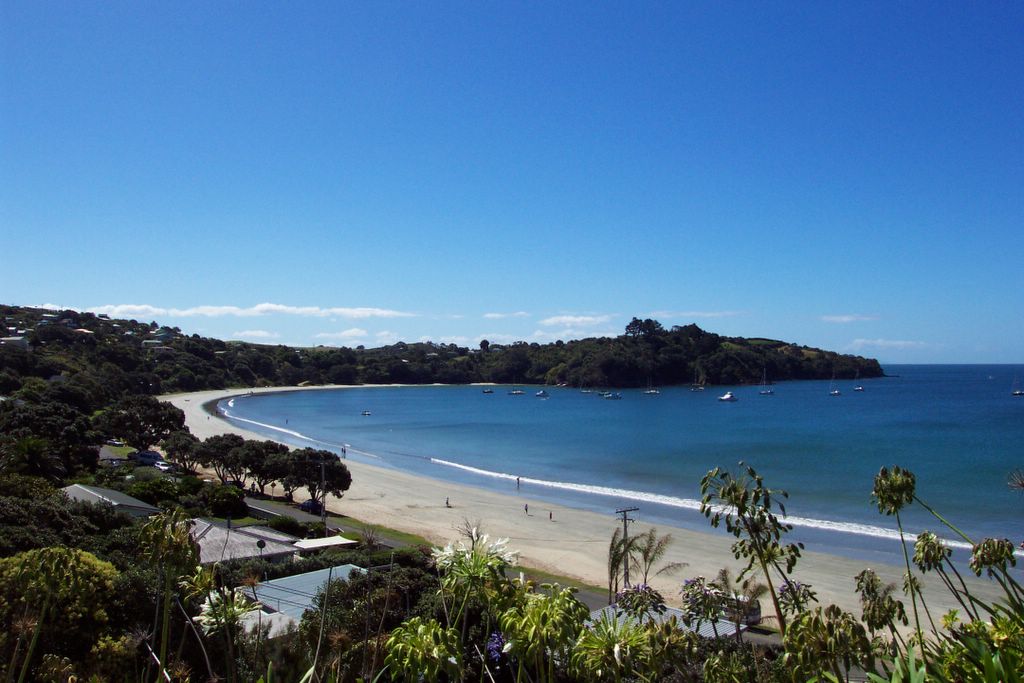
Oneroa Beach on Waiheke Island. Twenty miles, or a 35-minute ferry ride from downtown Auckland. It is a world away from the city. Quiet and peaceful.

Craters of the Moon, a geothermic place with steam vents and bubbling mudpools.

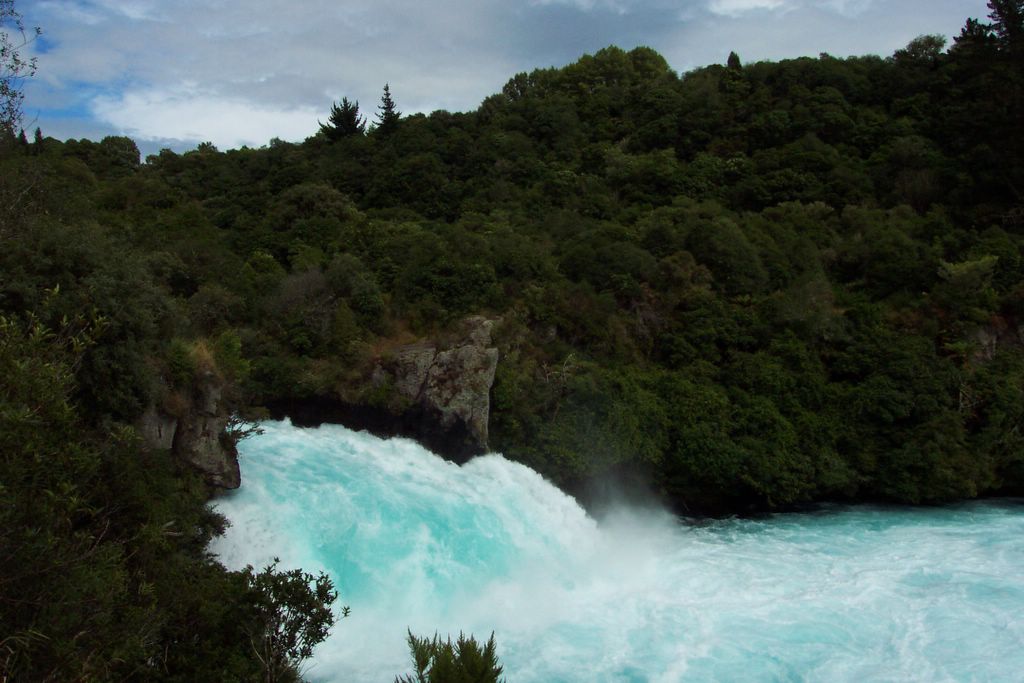
Huka Falls. Not really that high, but pretty turbulent.

View of the Emerald Lakes, Blue Lake, and Lake Taupo off in the distance from Red Crater on the Tongariro Crossing. The mist is actually from thermal vents and cracks just off the trail.

There is a trail of people hiking to the top of the Mangetepopo Saddle to the left of Mt. Ngauruhoe. The scree sloped I hiked up was along that rocky ridge below the red band to the left of the peak of Mt. Ngauruhoe.

Mt. Ngauruhoe, aka Mt. Doom.

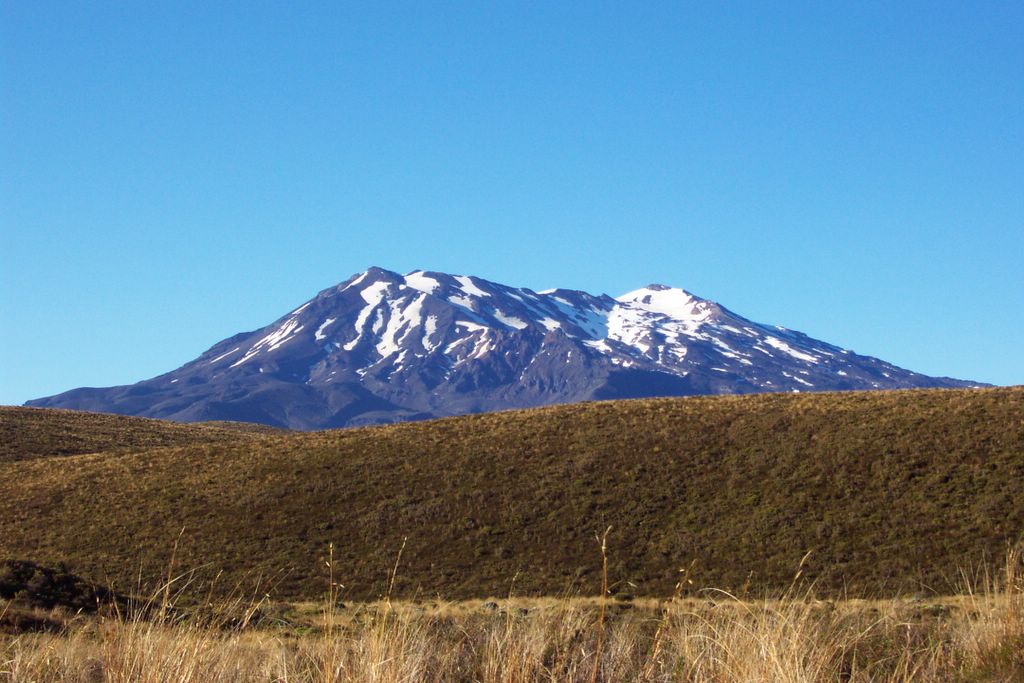
Mt. Ruapehu. I hiked to the crater rim on a foggy day.

Sunday, February 13, 2005

Tongariro and Taupo

I went to National Park Village after Wellington. I was there to do the Tongariro Crossing. It's a 17 km hike between Mt. Tongariro and Mt. Ngauruhoe. This is supposed to be the best one-day hike in the North Island, but it's often shrouded in clouds. When I got there it was raining, and the weather forecast predicted clouds for the next day, so I hitchhiked to the Mt. Ruapehu ski lifts about 15 km from National Park Village. They filmed some more the LOTR movies there, but I couldn't tell you where or what. Mt. Ruapehu, like all the other mountains in the region, are volcanos. Mt. Ruapehu last erupted in 1996. It doesn't have a proper peak, but it does have a huge crater, so I hiked up through the ski resort to the crater rim, where I found myself in a near-total white out. Visibility was about 20 meters, so I decided to find my way back down in the mist.
The next day I went and hiked the Tongariro Crossing. It was pretty crowded on the track. I made a side trip to hike to the top of Mt. Ngauruhoe, which was used as Mt. Doom. The clouds came in halfway up the peak, so I didn't get much of a view, but I had a blast sliding down the scree slope to the bottom. The Tongariro Crossing track was amazing passing though a couple craters and steaming volcanic vents.
The next day I went to Taupo, a city on the northern edge of Lake Taupo, the largest lake in New Zealand. It is stocked with California Rainbow Trout. These monsters are huge compared to the ones in California. I am not sure why. They get up to 20 lbs, I am told. They look like salmon. I didn't do any fishing, but I hiked to a place called Craters of the Moon, which was another geothermic area where I could see (and smell) steaming vents and bubbling mudpools. I also walked to Huka Falls, which is on the Waikato River, which empties out of Lake Taupo. The Falls were very impressive, if not exactly high. The river narrowed from 100 m across to 10 m across, making a very turbulent channel. I also got to bathe in the natural spa that emptied into the pristine waters of the river. That was pretty cool.
I came to Rotorua last night. This is known as Sulfur City because it's sitting in a huge crater and there are geothermic hot springs everywhere. Everywhere? yeah, like in people's yards and stuff. It's funny because if you have a hot spring on your property, you just throw some rocks on it so you know not to walk over the vent and burn yourself. It also stinks like rotten eggs here, but it's not as bad as it sounds. Well, maybe it is.
I am not sure where I will be going next, but chances are I'll be headed to the Waitomo Caves to do some caving.

Sunday, February 06, 2005


Look at that hair! I don't have a comb and I haven't enough shampoo. That's a perfect combination for dreadlocks, I'd say! This is actually at the Embassy Theatre where they had the premieres for the LOTR movies.

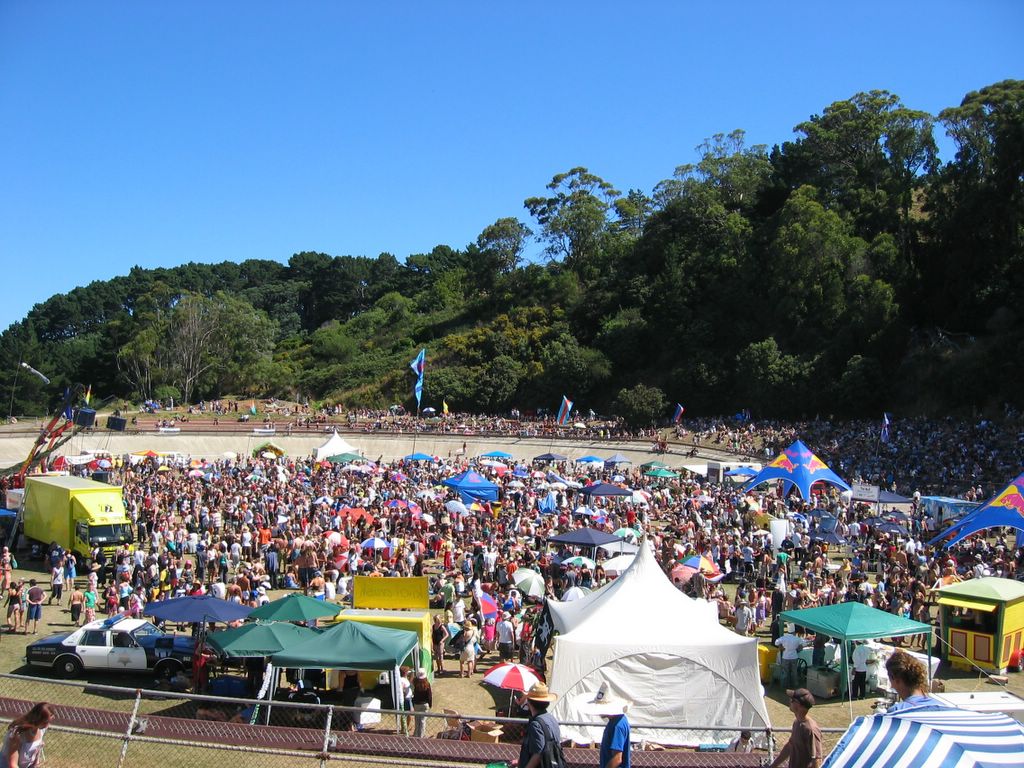
The free Bob Marley "One Love" tribute concert on Waitangi Day.

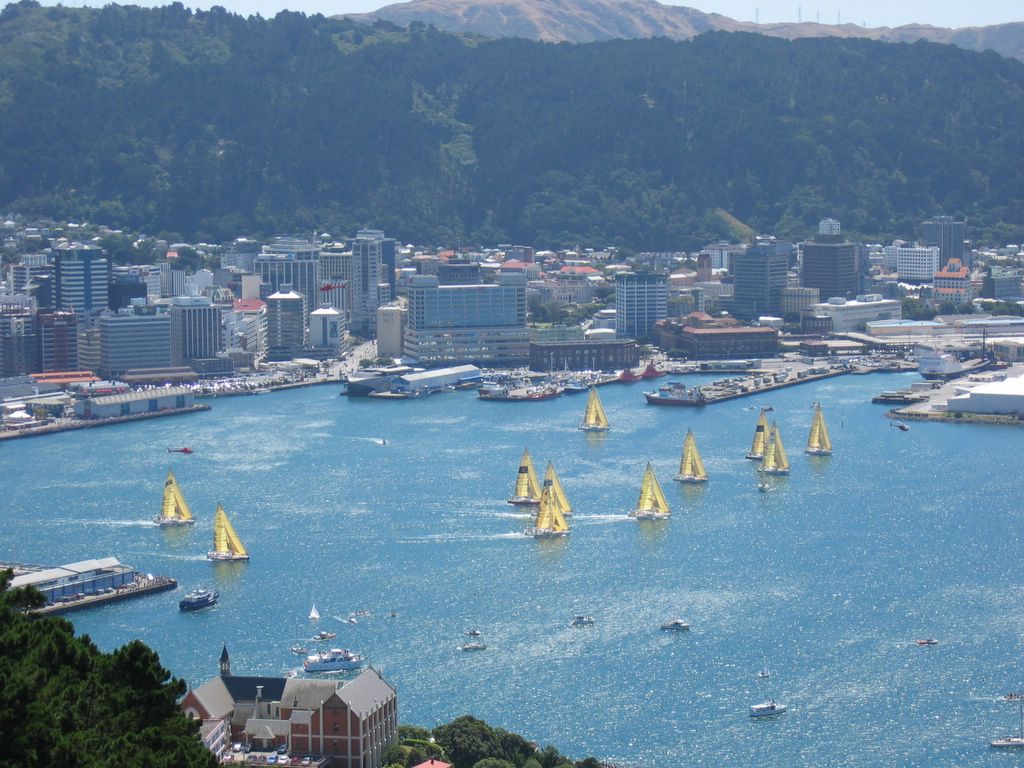
The boats after a few minutes into the race.

The 12 boats tacking for position before the starting gun.

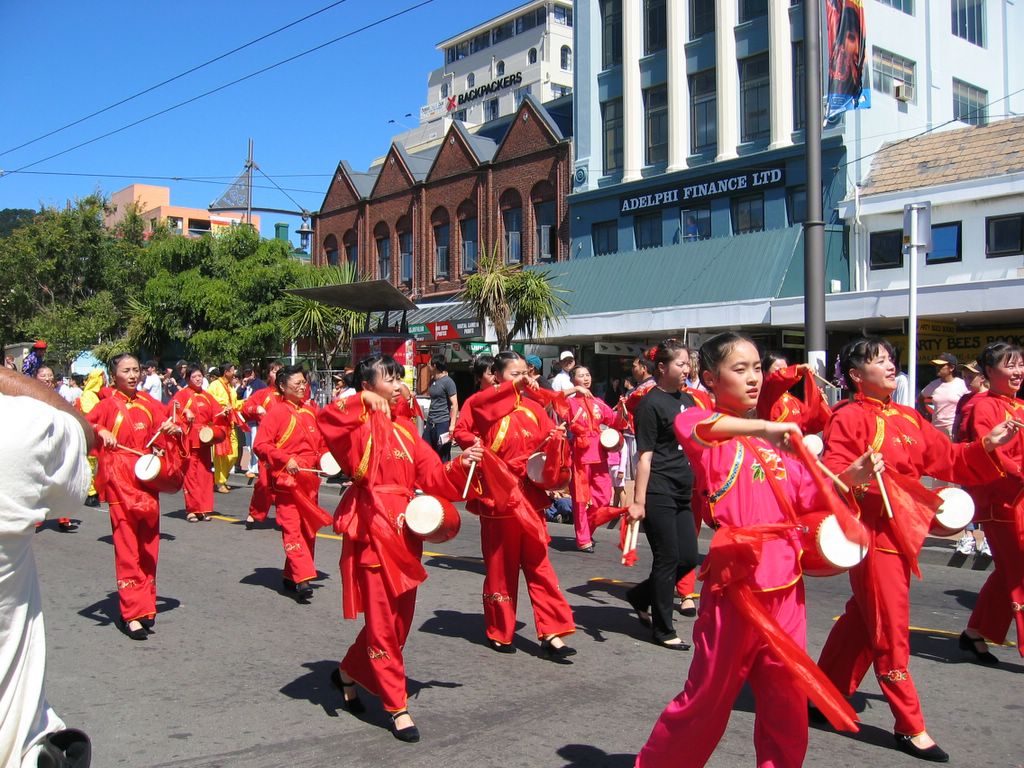
The Chinese New Year parade in Wellington. My dad tells me that Chinese New Year is actually February 9 this year.

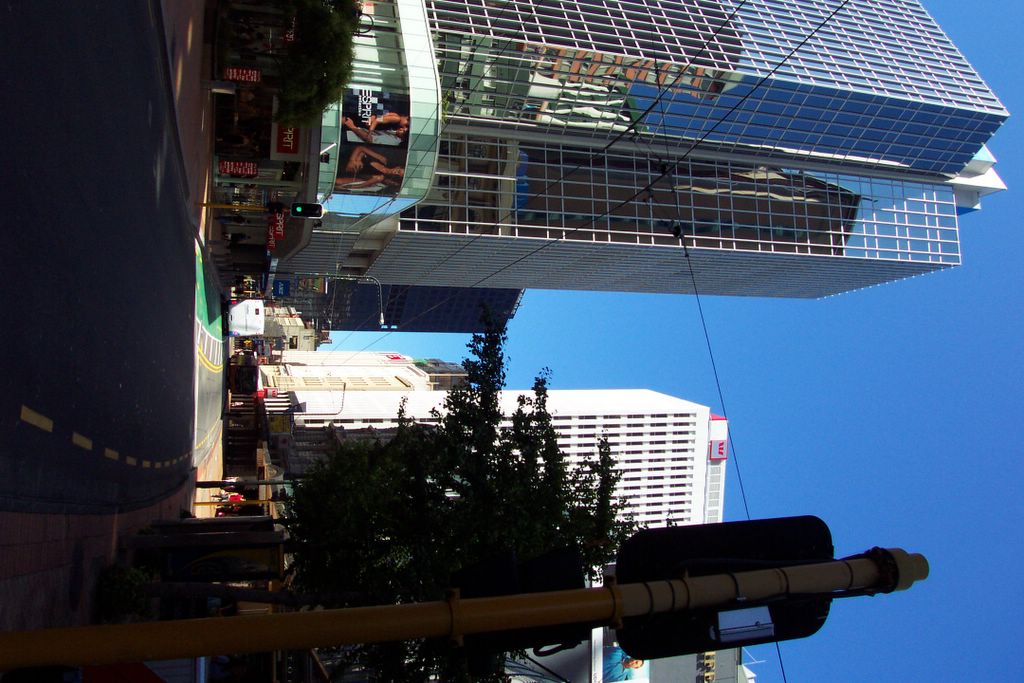
Wellington has more than 100,000 fewer people, but looks more like a big city. Maybe that's because it's the capital of New Zealand.

During the Sevens, most groups of people seem to dress up in wierd costumes. and drink. They drink a lot. and they don't sleep very much.

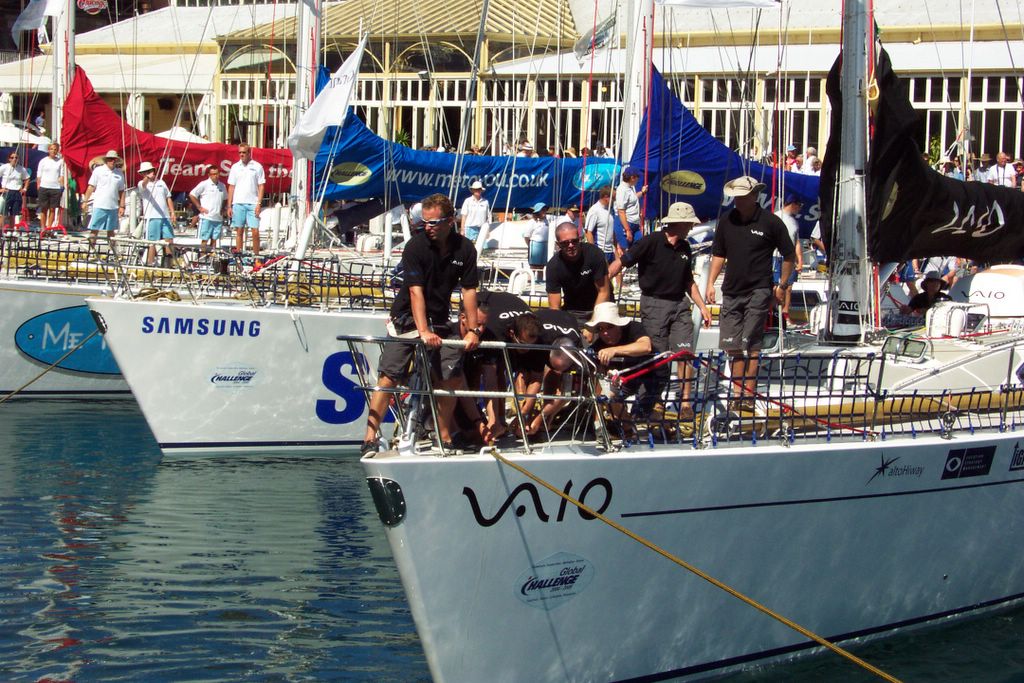
The Vaio team struggling to pull their lines. Who's steering thing?

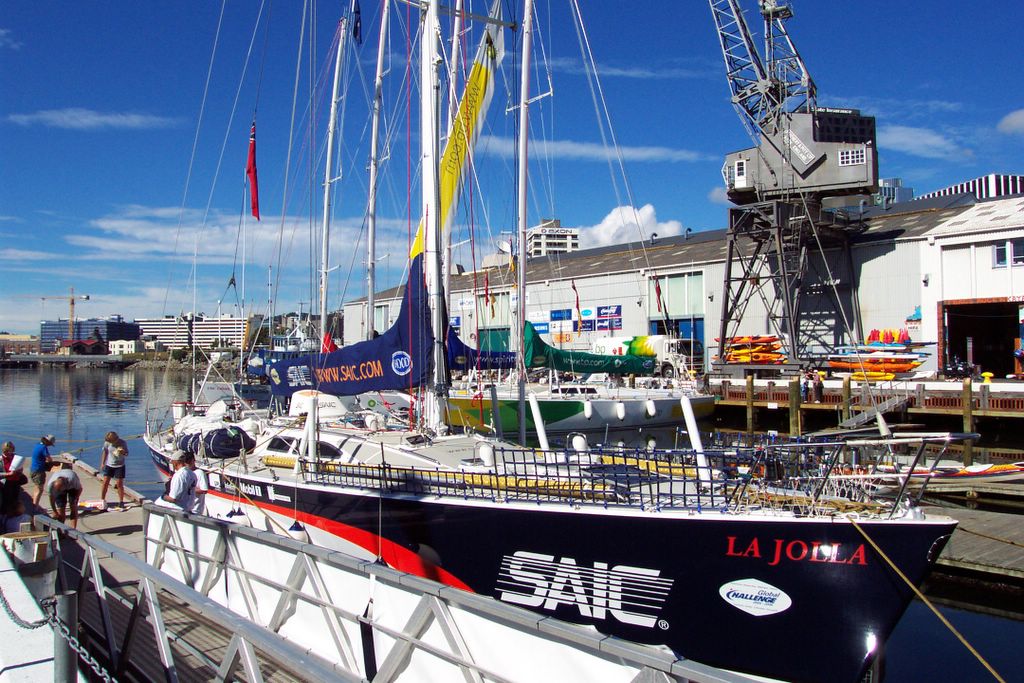
The SAIC boat crew, 18 in all.

The SAIC-sponsored boat. SAIC is a company in La Jolla, which is where I went to school in San Diego.

The lovely city of Wellington from Victoria's Lookout.

Who is Wellington named after? I don't know, but...

I will have spent five nights in Wellington. That's a lot more than I had initially expected, but it was a good weekend, and I happened to find a cheap place to stay. I spent a couple days going to Te Papa, the big museum in town (it's free like most of the museums in New Zealand and Australia). It takes a couple days to see it all. I think Te Papa means "our place", but don't quote me on this. Anyways, it's a museum about New Zealand. It cost $317 million to make, so you can be sure that it's pretty nice and well worth the visit.
The rugby sevens were in town and the tickets were sold out. That's okay, because they don't black out games like they do in the States. I was able to catch a few of the 20 minute matches in the evening. The States were represented, but they didn't do too well. They lost all three matches, getting shut out by the Kiwis (43-zip). The Kiwi's or, All Blacks, as they are known, went on to win the tourney. They did a victory "haka" after they won. It's a pretty cool Maori tribal tradition. There is a lot of bare chest slapping and stomping. If you've seen Whale Rider, you kind of know what I'm talking about. The Kiwi's, by the way, are fanatical about their All Blacks rugby team. It's the national team that goes to compete in international competitions. They seem to cream the competition. The Sevens brings in millions of dollars for Wellington, and the bars were pretty packed. A lot of groups of people dress up in wierd matching costumes, some of which are pretty outragous. It's like a big costume party where they drink a lot.
The weather was pretty hot this weekend, contrary to the weatherman's predictions. I was able to watch the Global Challenge boats take off today from their docks, and then I hiked to the top of a peak to catch the race in the bay. These boats are 72-feet long and are all identical, so that it's skill and luck that makes the winner. They're crewed by 17 "volunteers" that compete for these prized spots four years prior to the race. Their skippers are the only required professional sailors on board. The crew pays about $70,000 each to be on board for the year. Most of them find sponsors to help pay their way. They're going around the world "the wrong way", that is, from east to west, which is supposed to be harder. They spend a good length of time in the Southern Sea with ice on their ship. Awwwesome.
There was also a Chinese festival celebrating the upcoming New Year on the lunar calendar. I went to the One Love festival today (Waitangi Day). I will be headed to National Park, the town just outside Tongariro National Park, tomorrow. The weatherman is calling for showers for a couple of days, but I am hoping that he is going to be wrong like he was about his "cloudy and cool" weekend in Wellington.
Oh and as you can see, I have updated some pictures. I have tried to put them in sequential order by backdating them. You can check the archives to see if you have missed any.

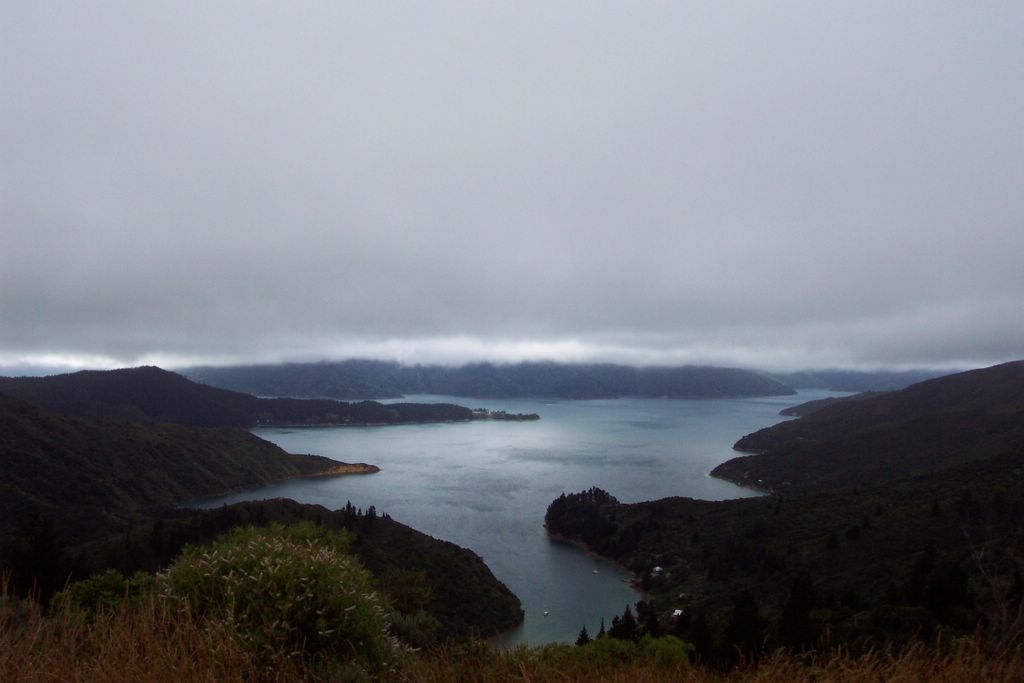
Bay of Many Coves. Yes, that is the name on the map.

Sunlight peeking through the clouds over the Charlotte Sound.

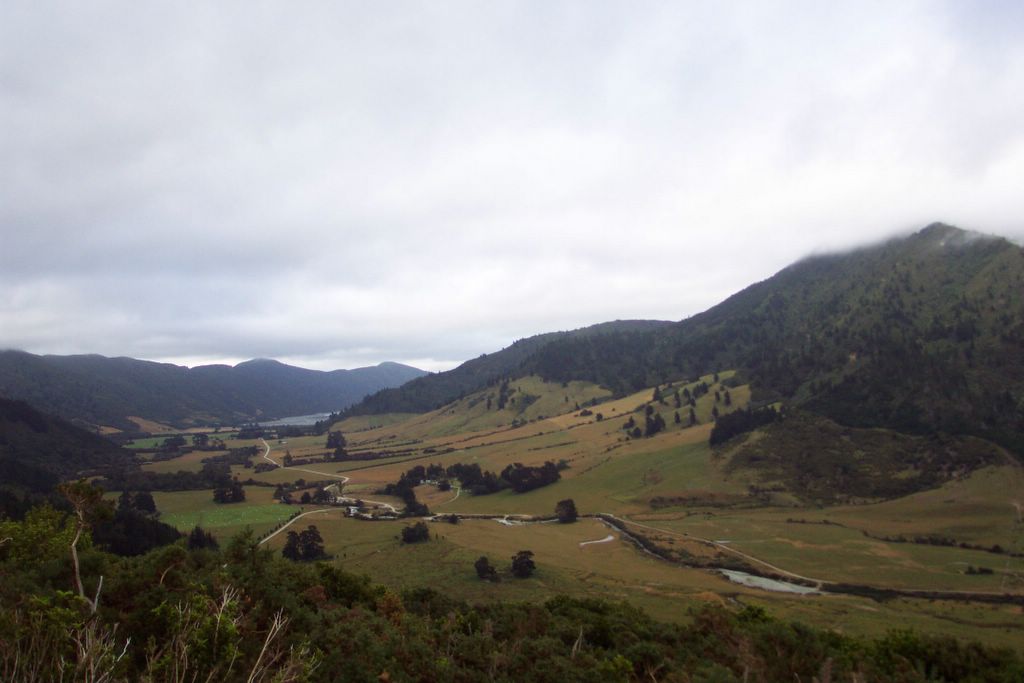
This valley leads to the Keneperu Sound, which is on the other side of the ridge. Yes, I am making up these names as I go along.

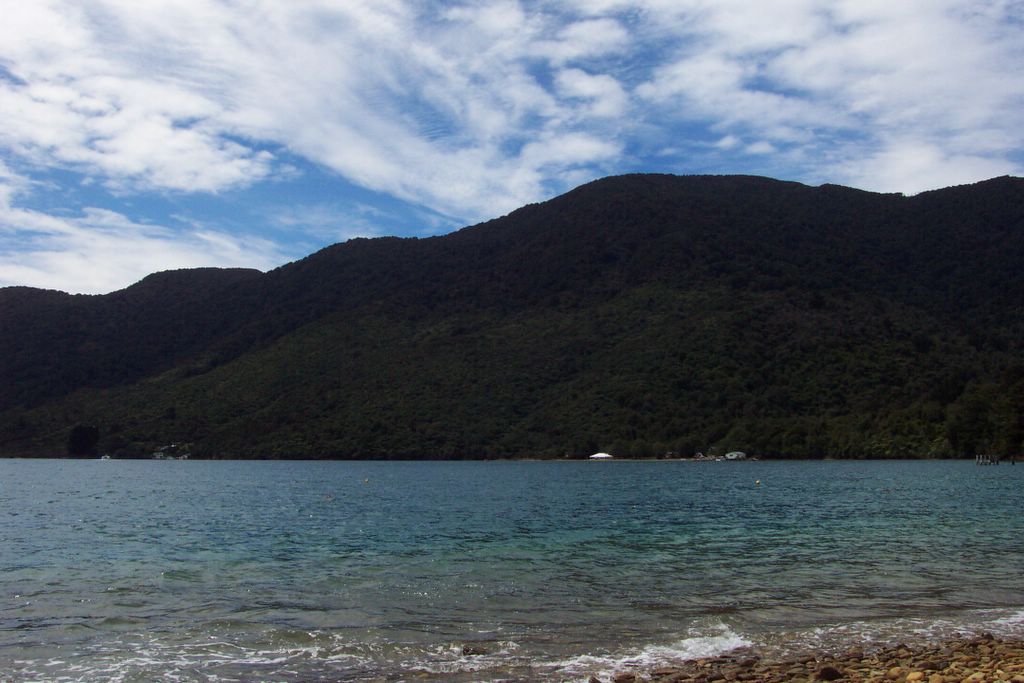
This is Punga Cove, the place I stayed the second night. The clouds came in and it drizzled on and off for the next couple of days, which was nice because it was hot and humid when it stopped drizzling.

Endeavour Bay at Queen Charlotte Sound. This is where I stayed the first night on the Track. The track follows the coast in some areas, but mostly stays up high crisscrossing the ridge.

Wednesday, February 02, 2005

Queen Charlotte Track

I spent the past three nights on the Queen Charlotte Track in the Marlborough Sound. It's a trail that has camping sites and lodges on it, that runs along the coast and ridge of a strip of land in the Marlborough Sound. It's about 71 km long. I took a ferry out to Endeavour Bay, which is about 4 hours from the start of the track (the ferry people said it was too late in the day for them to go to the very start). From there, it was about 57 km to the end. I got there about 2:30 pm and just hiked around the area, but the next day I only had 12 km to the next lodge so I ran the whole way. It was great to be running again; it's been about a month since I last went running. I think all the hiking I've been doing has gotten my legs in shape. I spent that day lazying around the jacuzzi. The next portion was about 24 km long to a place called Portage. It was pretty cloudy that day, but I made it in just over four hours. Shortly after I got to the lodge, it started drizzling, and it continued all day long well into the next day.
Today I only had 20 km to go to the end. This route is great because you can pay the ferry to take you out to the start and transport your pack to your lodge everyday. Yes, this is what a lazy man does. It was fantastic.
I took the interisland ferry from Picton to Wellington this evening. It was only 2 hours and a half hours to cross Cook's Strait. Now, I'm in the North Island. I'll be in Wellington (the capital) for the next few days. There are a few interesting things going on this weekend. First of all, there is a rugby tournament going on called "seven" which means they have seven people on each side instead of 15 (?). It's made finding accommodations kind of tricky. I will be changing hostels everyday for the next couple days. The tourney goes on Friday through Saturday. Saturday happens to be Chinese New Year, I just read. Sunday is Waitangi Day, which is sort of like their July 4th, except not really. The Treaty of Waitangi is an agreement between the Pakeha (the European settlers) and the Maori, but it's been hotly contested ever since its signing back in 1840. Anyways, I think there will be a bunch of festivities going on. Also, the third leg of the Global Challenge kicks off from Wellington on Sunday, so I will try to catch that as well. That's a big round-the-world yacht race. Anyways, those are my plans. Hopefully the weather will improve because it's been kind of drizzly the past couple of days.


Saturday, January 29, 2005


Just another beach at Abel Tasman.

Cleopatra Pools, where you can take a freezing swim to wash off the sweat. Or not.

Torrent Bay as it is filling up. I had hiked across from the right side to the left a couple hours prior to this photo.

Torrent Bay. When it empties out at low tide, you save about 70 minutes of hiking by cutting across the mudflats. The mudflats are littered with empty clam shells from the sandpipers. The low tide leaves the boats all high and dry.

Anchorage Bay at Abel Tasman, where we slept on a houseboat overnight. The biggest boat in the bay is the houseboat.

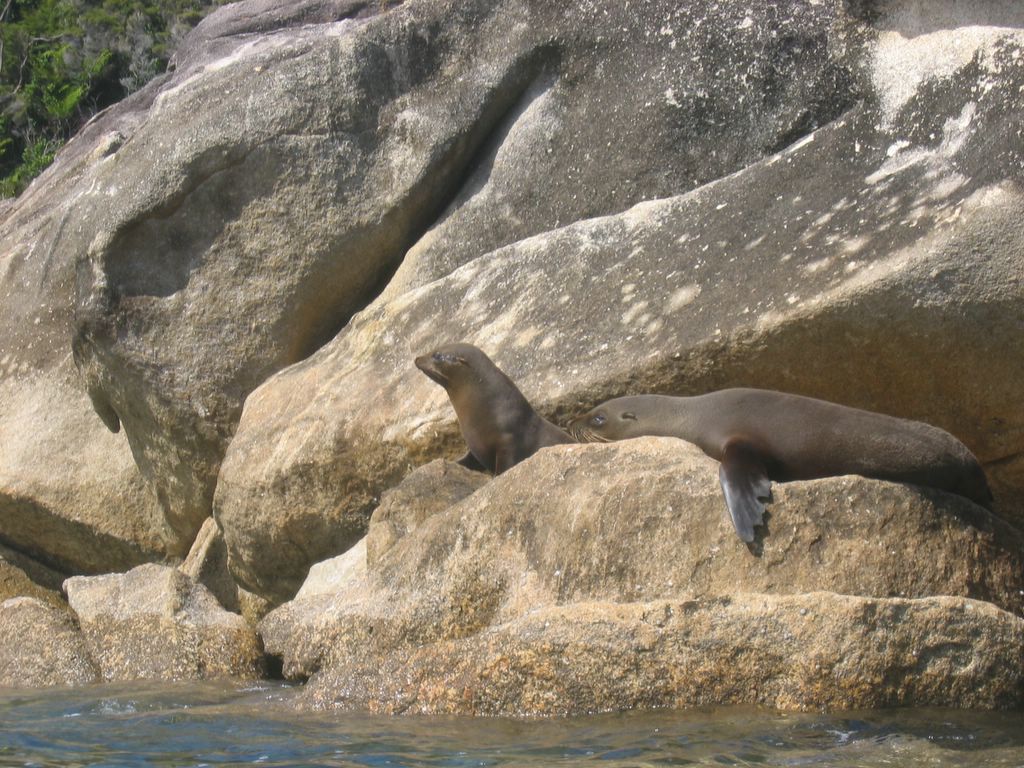
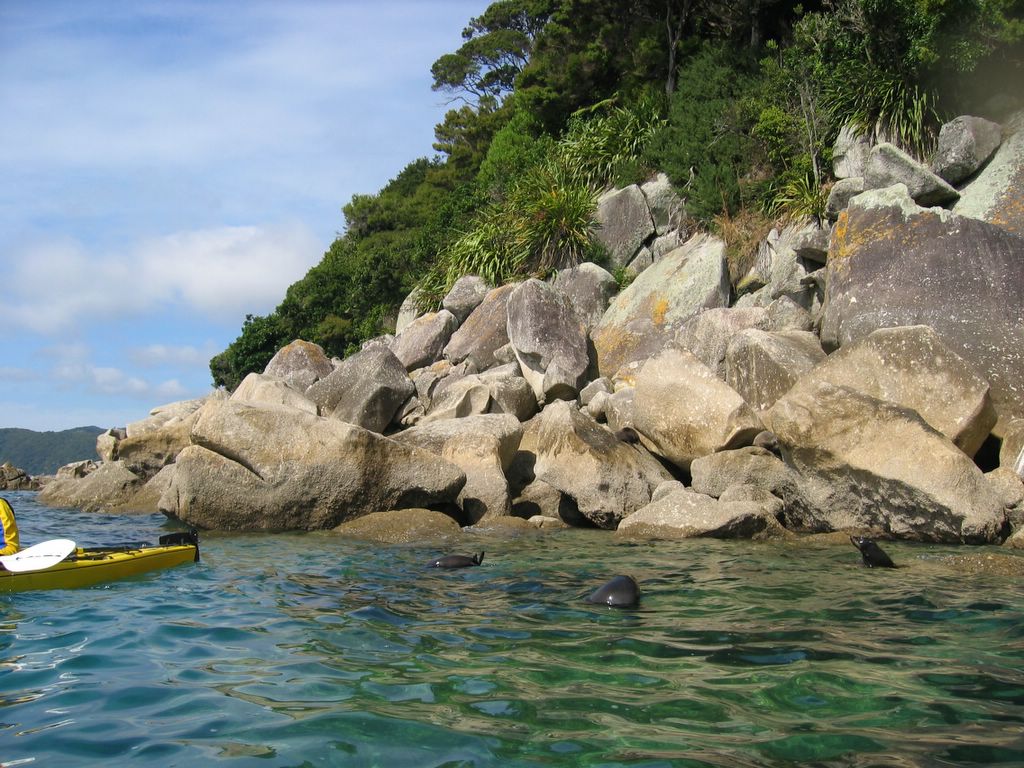
Seals sunning themselves on the rocks. I forgot to pack my bat. Just kidding...

Three seals saw us and slipped into the water to check us out. They proceeded to scratch their butts at us.

Kayaking in the Tonga Marine Reserve at Abel Tasman National Park. That's a seal doing the backstroke next to us in the water.

Abel Tasman National Park

I'm back in Nelson again, but I spent the past couple nights at Abel Tasman National Park. This is one of the most popular backpacking trails in New Zealand. It's a three to four day hike on the coast with some awesome views of jungle and beach. I signed up for a catered kayak trip to a marine reserve and got to swim around in the freezing water. We had some close encounters with seals that slipped into the water to check us out. It was pretty amazing to be a few feet from them. It was a pretty small group of us (four tandem kayaks). The conditions were perfect. It was really glassy in the morning, and in the afternoon the wind picked up, so we formed a flotilla and put up a sail and held on tightly and sailed into our cove. We had a couple races and our boat won. It didn't hurt that my navigator (steering with pedals) was actually a Canadian from Newfoundland with a season of sea-kayak guiding under her belt.
I got to stay on a houseboat with some guests. It was so different from the Whitsundays, in Australia. We had a nice BBQ and then settled in with warm drinks on the deck talking to Danes, Swiss Germans, Dutch, and a Canadian. It was nice and cool at night so we bundled up below decks under the comforters.
Today I hiked to a couple sights and then on my way out of the park.
Tomorrow I head to Picton and hopefully spend a few nights on the Queen Charlotte Track.

Tuesday, January 25, 2005

View from Mt. Beasley

View from Mt. Beasley

Once again Mt. Rollerston in the background and Avalanche Peak to the right of Mt. Rollerston. The traverse continues down the left ridge from Avalanche Peak to Lyell Peak which is near the center of the photo, and then along the ridge all the way to the left of the photo, then zig-zagging along that knife blade ridge toward me. This has been the best hike I've done so far. The views and the exposure and route-finding made it incredibly exciting.

View of Mt. Rollerston from Avalanche Peak

View of Mt. Rollerston from Avalanche Peak

This is supposed to be the best day hike in all of New Zealand according to the Lonely Planet. They have a race called the Avalanche Peak Challenge here every year. The winner usually makes it up in 55 minutes; it took me 90. Oh well. The hike is pretty good, but I ended up doing a traverse along the ridge over to Lyell Peak and Mt. Beasley. It was pretty exposed on this knife ridge, but fortunately there was hardly any wind. And of course, no one on this traverse.

Atop Mt. Aiken (1863 m)

Atop Mt. Aiken (1863 m)

I blazed up this peak from Arthur's Pass. Once again, there was no one else on this trail. From the top, I had a 360 view all around wiith no evidence of human encroachment except for a few buildings in the valley of Arthur's Pass.

Warm in Nelson

After three nights in Arthur's Pass (760 m elevation), I've taken the seven hour trip up to Nelson, which is at the northern coast of the South Island. Arthur's Pass was pretty cold the first night, but there was a toasty coal stove heating the lounge. It's a small village there with one store/gas station and a couple hotels and a couple hostels. I got to do a couple stiff day hikes there, visiting both sides of the valley. The first hike was to Mt. Aiken at 1863 m, then the next day I hit Avalanche Peak (1833 m), Lyell Peak (1828 m), and Mt. Beasley (1836 m). Now my Achille's tendons are paying the price. I was totally inspired by three guys I met the first night. It was cold and rainy, but they had just done a training trail run (25 km up to 1050 m) in preparation for the Coast to Coast challenge, a one-day 255 km race in a few weeks. It's one of those multisport races with trail running, river kayaking (class 2), and road-biking. These guys set off to kayak for five hours the next morning.
Now I'm in Nelson to head to the Abel Tasman National Park, but I still have to figure out what I plan on doing there.

Fern trees in the rainforests next to the glaciers. The silver fern, by the way, is the national symbol for New Zealand. I'm not sure if I've encountered an silver fern during my hikes. I did encounter trees like these in Australia in the Daintree National Park. They tell the tourists that these mighty trees grow about one to three centimeters a year. I don't know if this is true or not, but you can tell the age of the tree by its height. There were signposts showing where the glaciers had receded from 1950 and even 1750. You could tell that the trees in those areas were clearly of limited height, so maybe it's not a bunch of crap they tell the tourists.

Franz Josef Glacier

Franz Josef Glacier

I hiked up to Robert's Point above Franz Josef. This glacier is actually creeping forward about 1 meter a day. This is right next to a rainforest. There are a million helicopters buzzing around above taking tourist up for a view of the mountains and taking them on jaunts along the glacier.


More sheep we encountered on the bus. Sometimes traffic comes to a complete halt because of grazing animals crossing the roads. I did not encounter a single multi-laned highway in the South Island.

Mt. Aeolus

Mt. Aeolus

This was just a 15 minute stop on my bus ride from Queenstown to Fox Glacier, but it was so pretty I had to take a picture.


A rainy day in the Milford Sound. It's supposed to be pretty impressive with the big waterfall. It's a fiord. Whatever.

View from Ben Lomond Peak

View from Ben Lomond Peak

This is a peak right behind Queenstown. This view overlooks the town of Queenstown below and the Frankton Arm which is that thin slice of Lake Wakatipu that extends to the right. This lake is huge, by the way. It was hailing and very windy up here. I was wearing shorts. The trail I took comes along the ridge that you see above Queentown, which is the town on the bottom part of the lake. This ridge goes to the bottom left side of the photo. It was really windy and exposed but easily navigable.


Queenstown and the Remarkables

Queentown and the Remarkables

This is the view from my hostel. This place was so nice that I ended up staying four nights. Amazingly this town is now well known for its high-adventure pursuits rather than it's beauty. They filmed a lot of the Two Towers in the surrounding area. The Remarkables are the peaks lit up by the setting sun. This is Lake Wakatipu, a huge lake in the South Island.